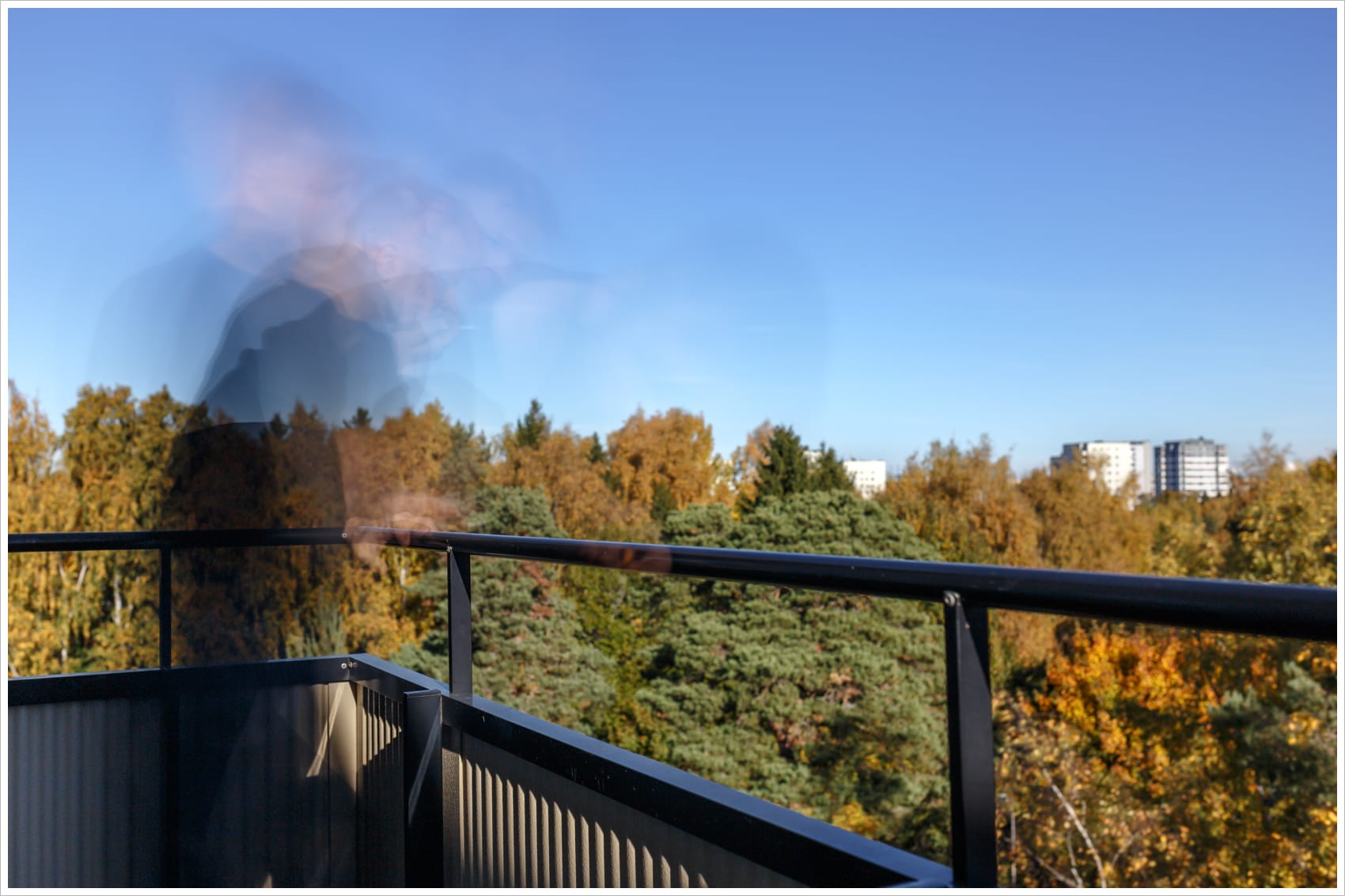
This is an area...
I have not fully explored yet.
Meaning, that when you make an exposure that lasts let's say 1 minutes - leaving the shutter open on a Fujifilm GFX camera... you can sometimes get "white pixels". Like little holes in the image. I read already earlier, that the Fujifilm GFX 100 types of cameras, have this far more pronounced compared to the Fujifilm GFX 50s II camera - where I didn't see any of that.
There is a feature, which irons this out via a special setting in the camera: but requires the camera automatically to take a second ("dark frame") shot.
In essence it goes like this:
you take your longtime exposure of 1 minute. Then the camera takes automatically a second shot of 1 minute - which is a "dark frame" shot. Like if you had a lens cover in front of the camera/lens taking a photo.
The camera then subtracts the darkframe from the real photo, eliminating the white or "hot" pixels.
Fujifilm GFX 50s II - a tolerant one
Now, with the older Fujifilm GFX 50s II camera, I never had to enable dark frame exposures. It was void of any white pixels, as far as I can remember.
Fujifilm GFX 100s II - not so much
The newer Fujifilm GFX 100s II however (including all other GFX 100 models) do create "hot" pixels, the longer the exposure goes (without enabling the automatic dark-frame shot).
It is a pity, because imagine I would want to do a daylight photo with a strong gray filter on it - exposing for let's say 10-15 minutes... then the camera needs to take another 10-15 minute shot - in order to eliminate the white pixels.
Well, that is rather tedious, to say the least... Either way; I have to test this deeper in order to see where the thresholds go. Each cameras more specific behaviour in that regard.
I just use the Fujifilm GFX 50s II camera
for longtime exposure photography
Yeah. That works ! I just use the Fujifilm GFX 50s II camera for longtime exposure photography. I mean it is a stellar camera in terms of quality and resolution.
I just have to see, how long can i exposure until it creates white pixels ? I suspect it doesn't really needa second darkframe shot. I can't remember ever having encountered hot pixels in my longtime exposure images.
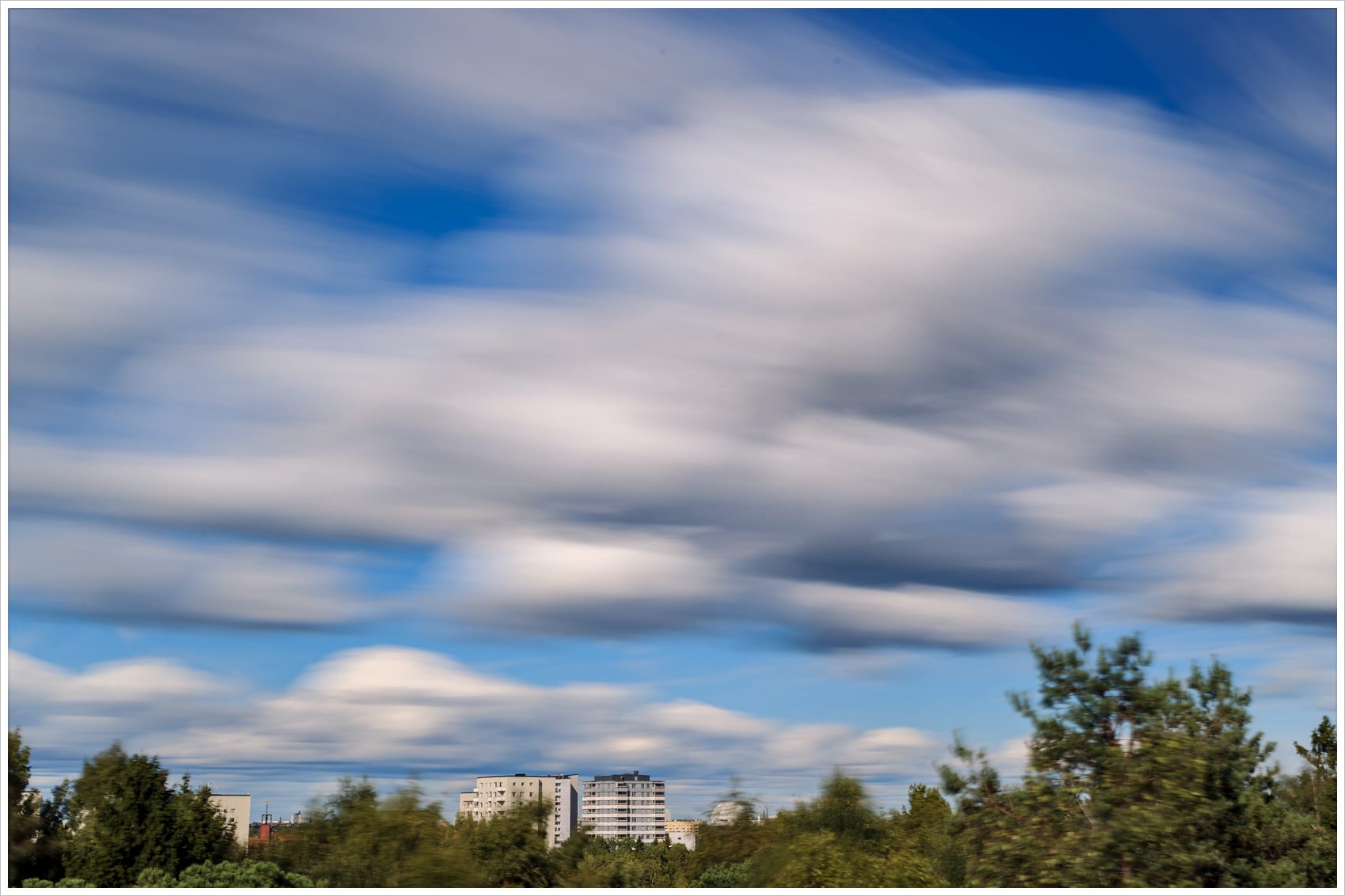
My longest exposures with it, have been 4 minutes (with darkframe shot disabled, i think) I found in those photos only ONE white pixel.
So, that is a good sign !!
Therefore I will most likely use the Fujifilm GFX 50s II for that type of photography instead - because I don't need to wait twice the amount of time. Which matters, when you do, say 15 minute exposures.
Grayfilters in daylight
Which I might do soon, because i have two ND 1000 grayfilter incoming (10 stops light reduction) - especially for my Fujifilm GF wide angle lenses, with 58 mm Ø and 82mm Ø size. I don't want to fiddle with step-rings on those two lenses and like to use its native lens hoods.
I have another gray filter already at home in 77mm Ø, which is extremly strong; ND 100000 or 16.6 stops light reduction. I didn't order the strong ones for the other sizes, thinking that it might be too strong after all.
Marumi ND100000 gray filter
(16.6 stops light reduction)
I had ordered that one back in 2013, because i wanted a very strong reduction of light combined WITH shallow bokeh (wide open apertures) at the same time.
However with the Fujifilm GFX cameras, I am not out for shallow bokeh - since I'll be working with wideangle lenses. Setting the ISO to a very low ISO 40, and stopping the lens down - together with the 10 stop ND filter. That should be enough combined, in order to get long exposure times during daytime.
Speaking of:
this type of photography, the cameras need to be mounted on a tripod - which means things like AF (autofocus) and IBIS (in-body stabilization) are not important. In fact both are disabled for longtime exposure photography anyway. So, the Fujifilm GFX 50s II will be a perfect choice to do longtime exposure photography in daylight.
Without the hot pixel issue or second "dark-frame" exposures required.
So, I hope. |