An unusual decision
I bought the manual focus lens; Samyang XP 85 mm ƒ1.2 lens - with the aim to adapt it to my Fujifilm GFX cameras (50s II, and 100s II). The lens is an ultra bright portrait lens, which some consider to be superior to the legendary Canon EF 85/1.2L II lens. The Samyang XP certainly outperforms my old Canon FD 85/1.2L (when using images in color).
The Samyang XP 85 mm ƒ1.2 is what phillipreeve.net calls > "A true hidden Gem" of lens.
Phillipreeve.net
I refer to his homepage simply because
1) He is such a brilliant photographer, where his many test photos really stand out. Not just casual "tests" in images with no real content - but brilliantly made photography, showing off what a lens is capable of - no matter how good or but it is. I find that very inspiring ! It gives even no so good lenses - if you just read the plain numbers and illustration - but shows that even a not so good lens in certain aspects, can at the same time, have brilliant characteristics. You will then be the judge of it fits your personal preferences or not.
2) He really digs in deep in terms of lens tests, descriptions, information - as well showing a wealth of photo examples, illustrations and comparisons.
It is truly a wonderful site for people who wish to know more about hoe a lens performs. He also has test and examples of vintage lenses - how they perform on modern digital cameras.
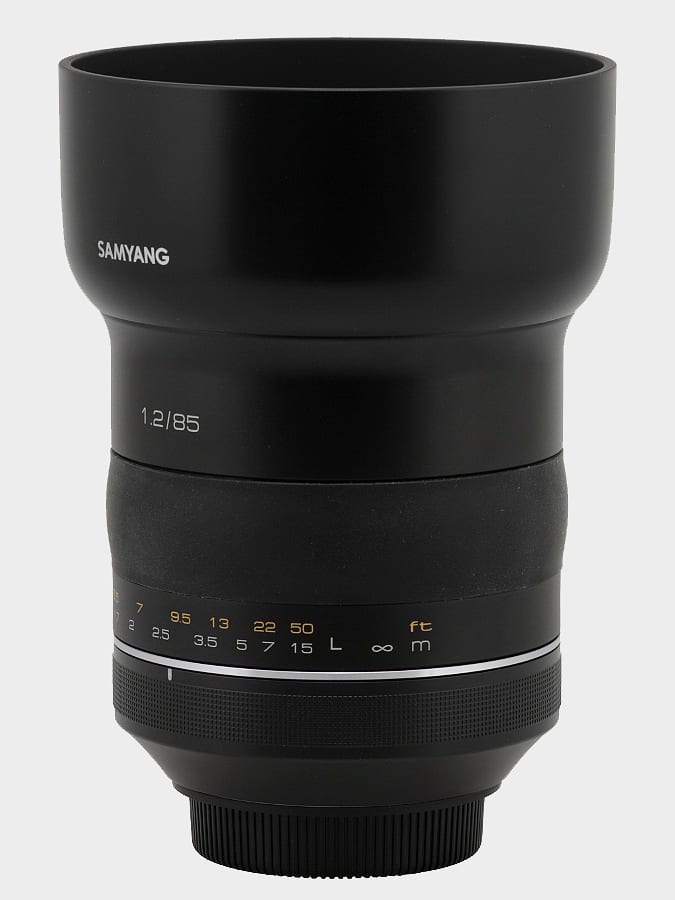
I have seen several images made
with the Samyang XP 85/1.2 on GFX
What strikes me is the clarity of finest details, when used at wide open aperture ƒ1.2 - with rather little LoCA (chromatic aberrations). The Canon EF 85/1.2L II - which too is a competitor lens to be adapted to a larger sensor camera... but that one shows pretty severe chromatic aberrations. I know this already, from Daniel's images, since he owned that lens. Albeit, in many situations the Canon EF 85/1.2L II does a better job, especially in not that contrasty light, as well in the studio.
Never mind.
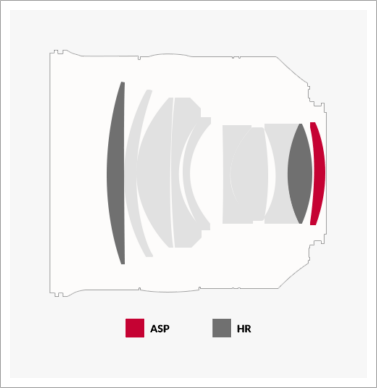
Aspherical and High Refraction lens elements
I chose the manual focus Samyang XP 85/1.2
with its not really that known - but has stellar optical qualities.
I do not mind having to use manual focus in the days of mirrorless cameras, because it isn't an issue anymore Plus it gives you a feeling of being a little bit of a "real photographer"; You still engage in an analogue way - instead of an autofocus lens, where "everything happens on-the-fly".
Sometimes I enjoy that feeling of having to engage in an "analogue way".
Min focus distance: 80 cm
The ultra bright ƒ1.2 portrait lenses often have a longer min focus distances.
• Canon FD 85/1.2 it is 90 cm,
• Canon EF 85/1.2L II it is 0.95 cm
•
Samyang XP 85/1.2 it is only 80 cm.
• Native Fujinon GF 80mm ƒ 1.7 for GFX cameras, does it even better: 70 cm
• Champion: Mitakon 80 mm ƒ 1.6 (made for GFX) brings it down to 50 cm. WOW.
80 cm is for me, perfect
I never really liked that the Canon EF 85/1.2L II stops at 95 cm. - being a bit too far away sometimes. There is of course a reason for it. Once you get closer with that lens, the optical quality drops like a stone. I tested this with a minimal extension ring - but the quality in sharpness and contrast were awful.
I also don't know if the Canon EF 85/1.2L II has floating elements - I guess it has not (the same with the EF 50/1.2L - also doesn't have floating lens elements. That already started drop visibly around 1-1.5 meters or closer).
The lack of floating lens elements explains the rapid drop in quality (at various thresholds from lens to lens) once you get into the close focus range / near min focus distance.
Communication chip
Despite being a manual focus lens, the Samyang XP 85/1.2 has a communication chip to which it communicates aperture (and EXIF data).
Naturally I can use this lens on both my Canon EOS R and R6 cameras, as well via Fringer adapter on the Fujifilm GFX 50s II and 100s II cameras.
Other characteristics
There is vignetting present of course - but no hard vignetting - which of course is good. the soft vignetting can be ironed out in Photoshop, no problems. The only thing I don't know is, how much or little the lens hood affects the vignetting.
Samyang XP: High end line of optics
Samyang XP lenses are made to highest standards; : gone are the plastics - everything is metal. Its look reminds me a lot of the original Zeiss Otus line which too has those rounded shapes. (Samyang makes the newer generation of Zeiss Otus lenses today). IF they perhaps made the original Otus line, I don't know.
Samyang also states, that the XP series are made for sensors with 50 MP. Explains perhaps the high quality at ƒ1.2 in the fine details. The performance in images i have seen is really surprising.
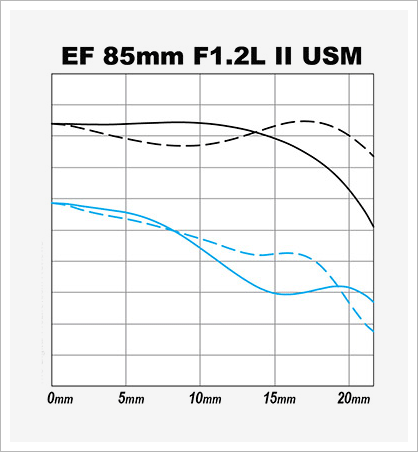
Here the MTF charts for Samyang XP 85/1.2 vs Canon EF 85/1.2L II at wide open ƒ 1.2 aperture performance, with indicators of 10 lines/mm (contrast modulation transfer of coarse details) and 30 lines/mm (contrast modulation transfer of coarse details)
The XP 85/1.2 does show some impressive (theoretical) MTF numbers I must say.
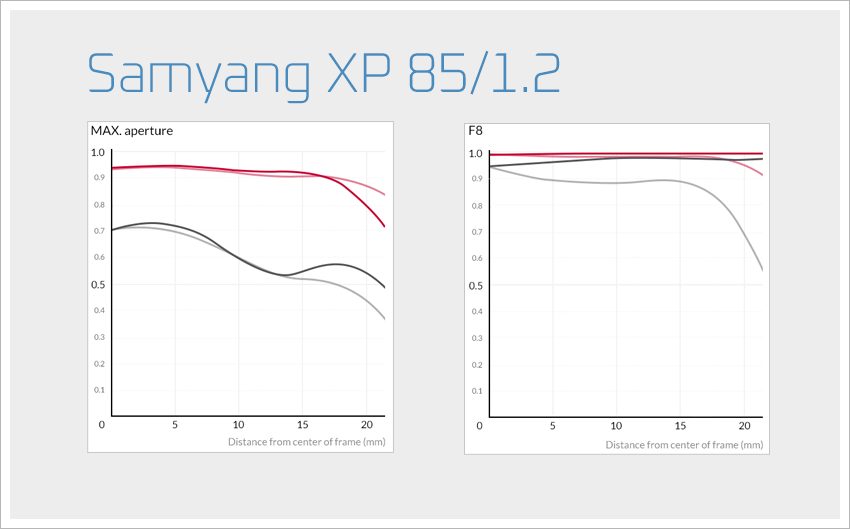
. 
at wide open aperture ƒ1.2
The filter diameter is large...
a whopping 86 mm - while the diameter of the metal lens hood is even larger. The weight is 925 gram, almost a kilo; not exactly a small nor light. It is a lot larger than the Canon EF 85/1.2L II... And way larger than my... now i have to almost say "tiny", Canon FD 85/1.2L lens.
Ooops. I wonder if i was clear about the actually size of that best, when I ordered it ?
You never really get the impression how large the Samyang lens is, when you see it in photos on the internet. Knowing the numbers now... the Samyang XP it is in the class of the titans in weight: like the Mitakon Speedmaster 65mm ƒ1.4 weight class (1 kilo). Which is a whopper - you feel the weight significantly.
Still; nothing comes close to the 1.6 kilo heavy, 105mm Ø Sigma ART 105mm ƒ1.4 lens. Mama mia.
Well, in a week we shall see more.
I bought the Samyang XP 85/1.2 for the nice price of 504 € from MPB (Germany) in "excellent condition". It was the last lens they had in the Canon EF fit.

Below a photo
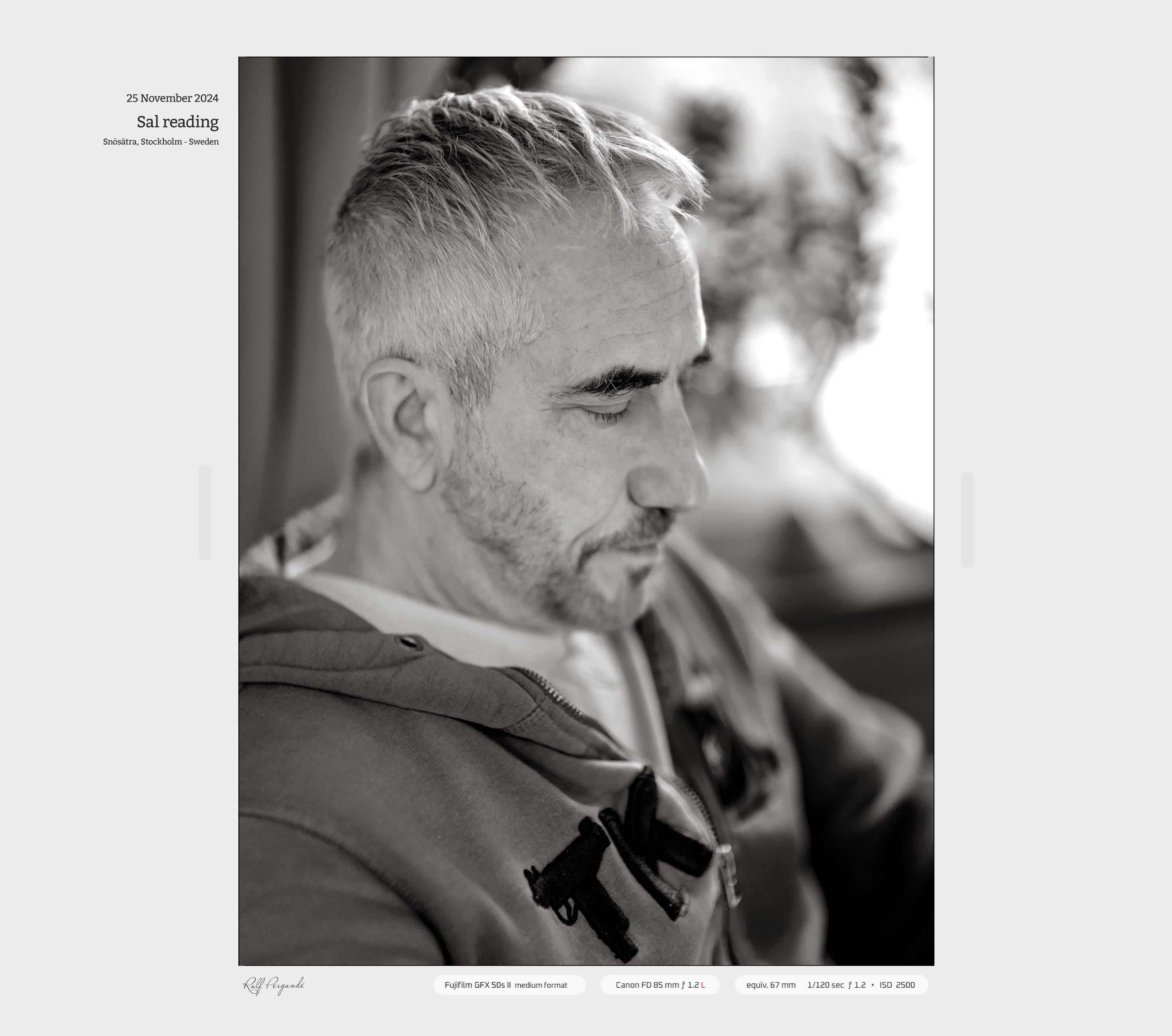
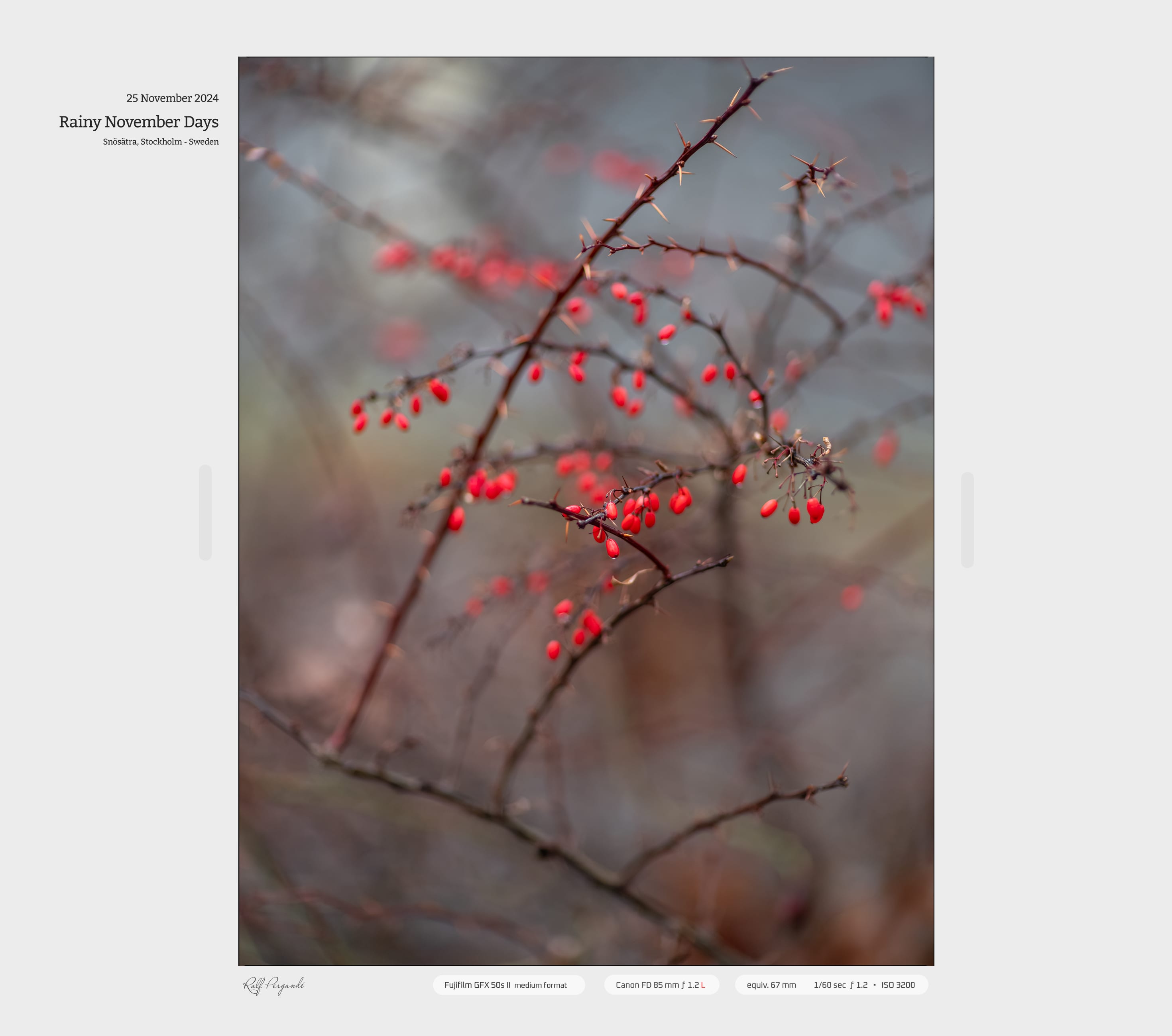
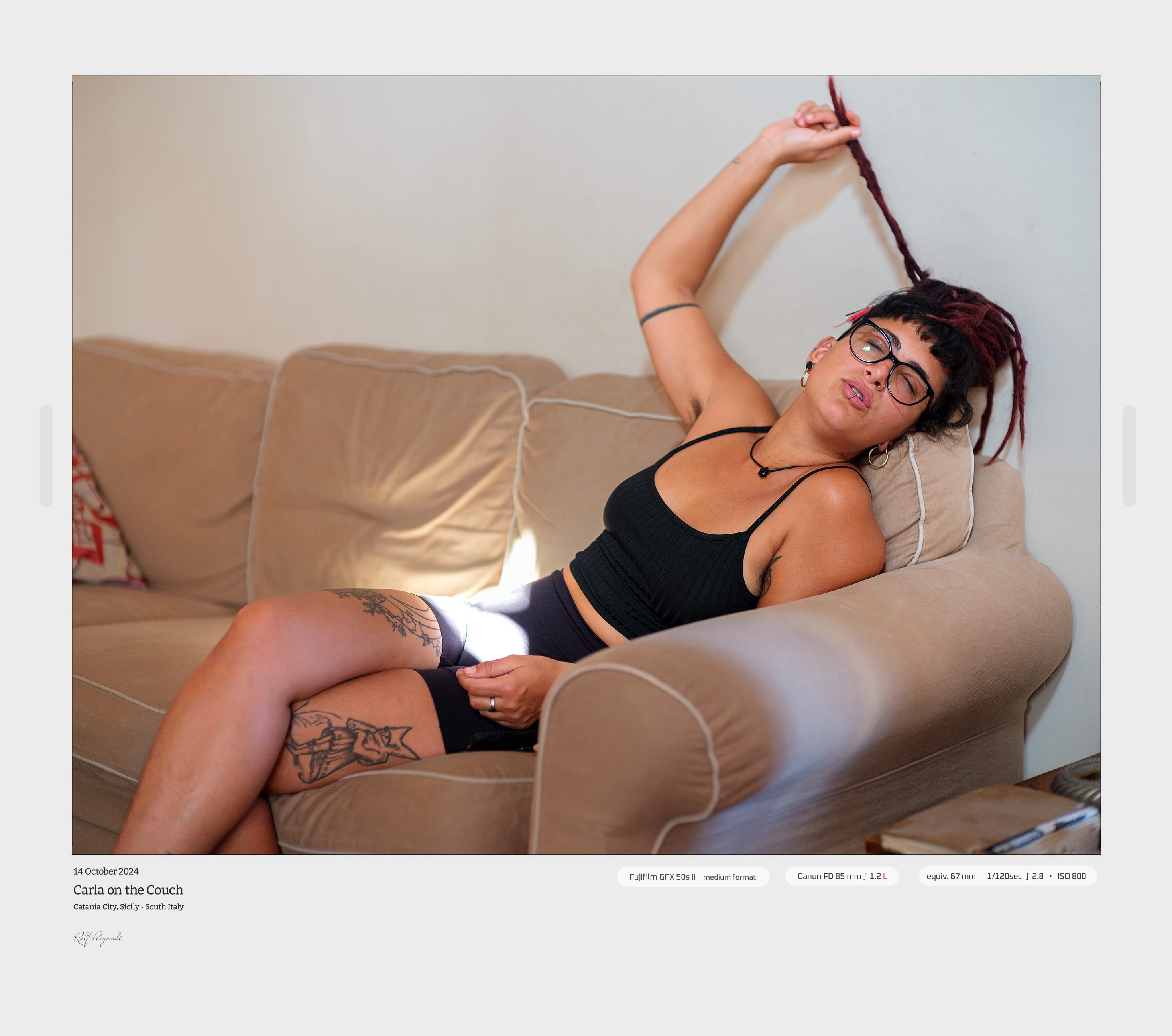
made with Canon FD 85/1.2 L and Fujifilm GFX 50s II at wide open aperture ƒ1.2. Not bad for an old lens - and still showing that special bokeh which its 85mm ƒ 1.2 lens line up has shown ever since. I recognize the rendering style very well from the analogue film era.
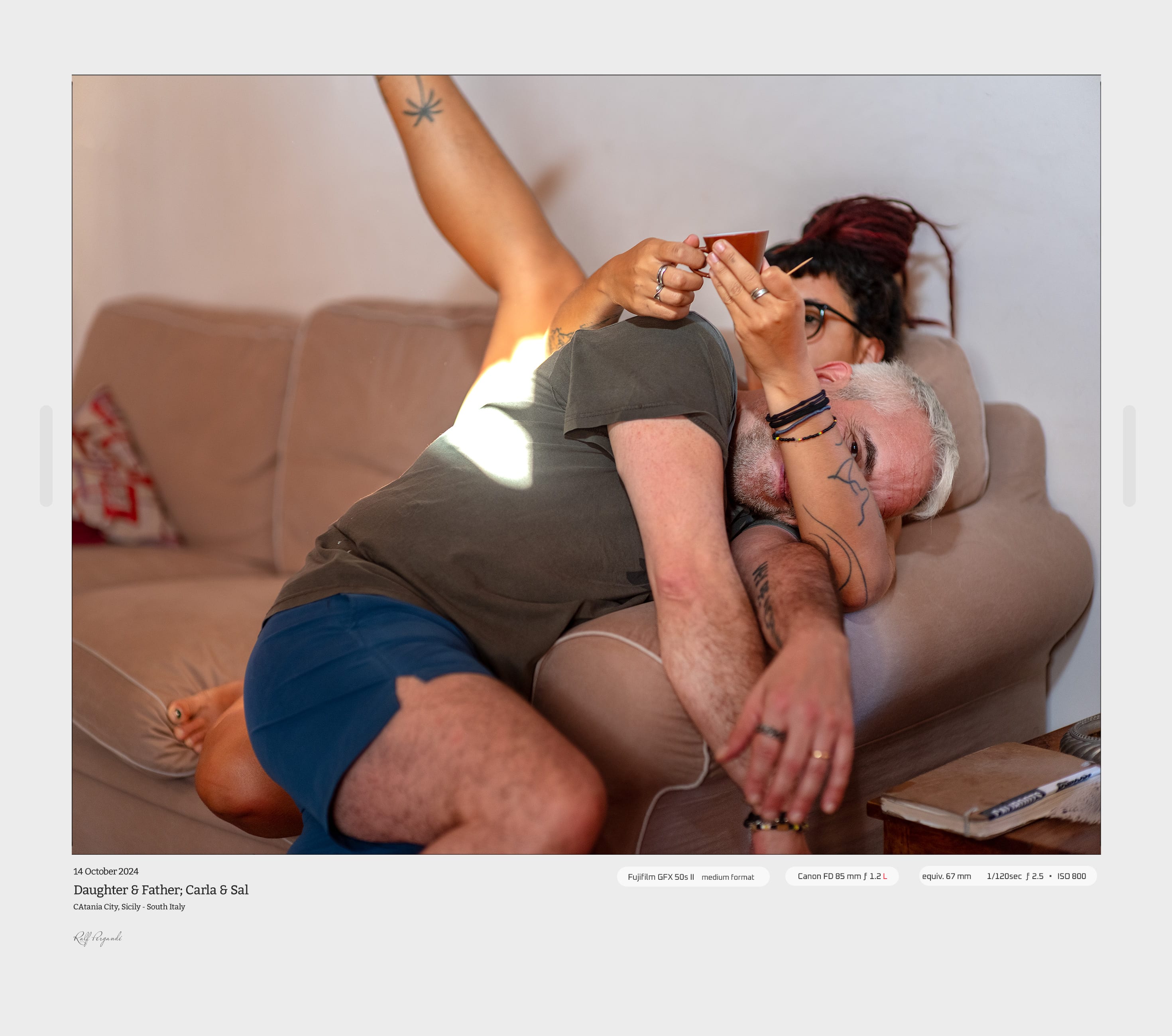
But the lens was a pain in the ass, to get the focus exactly where you wanted it (with my Canon T90 in the 80s). in 90% of the case, i misses it. So, i often had to stop down to aperture ƒ2.5 in order to make good sharp photos.
Therefore, in today's world of digital, mirrorless cameras - it is WAY easier to focus these light giants. Also notice how the image changes character from soft/dreamy to clear, once you stop the lens down. |