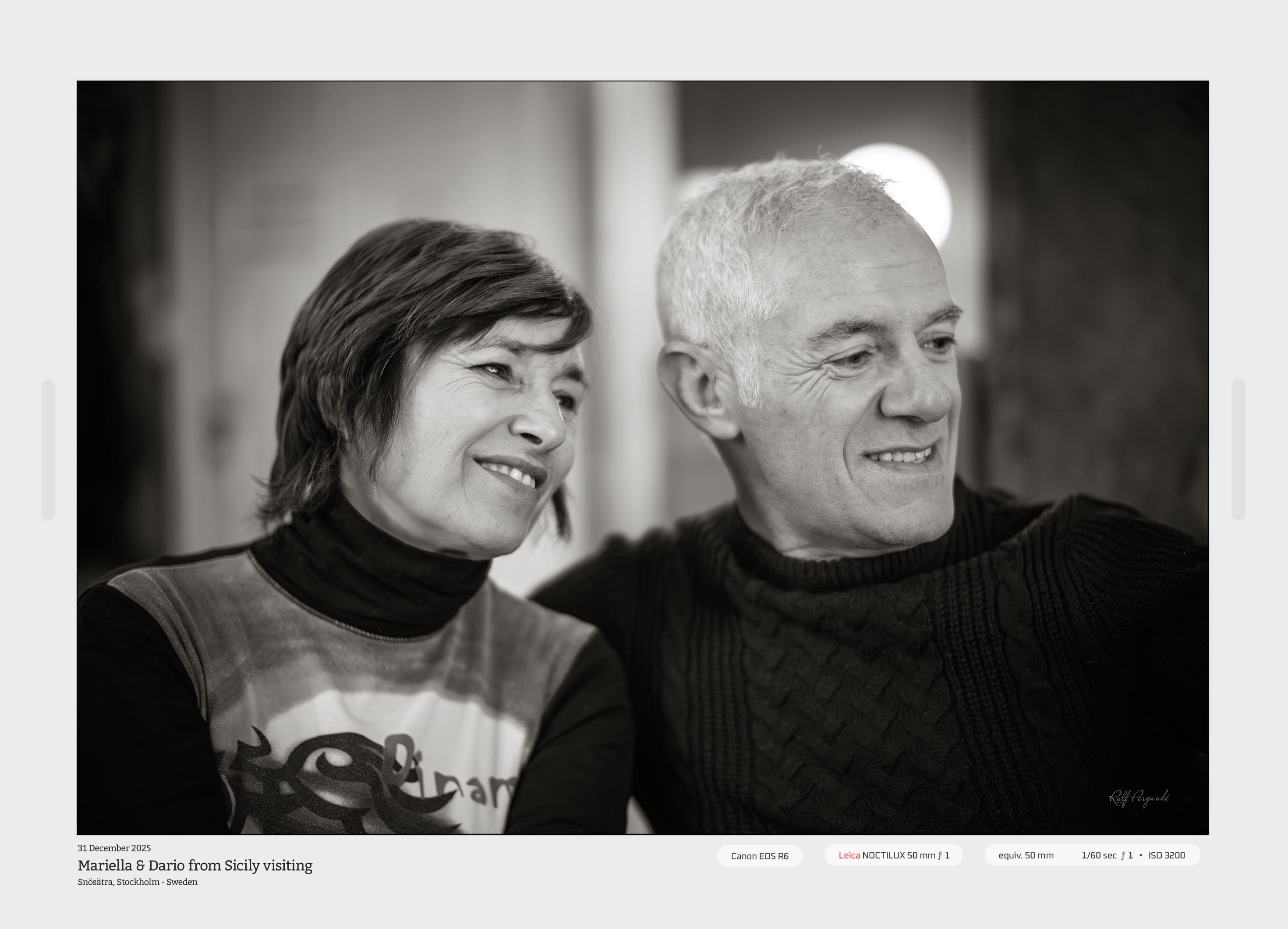
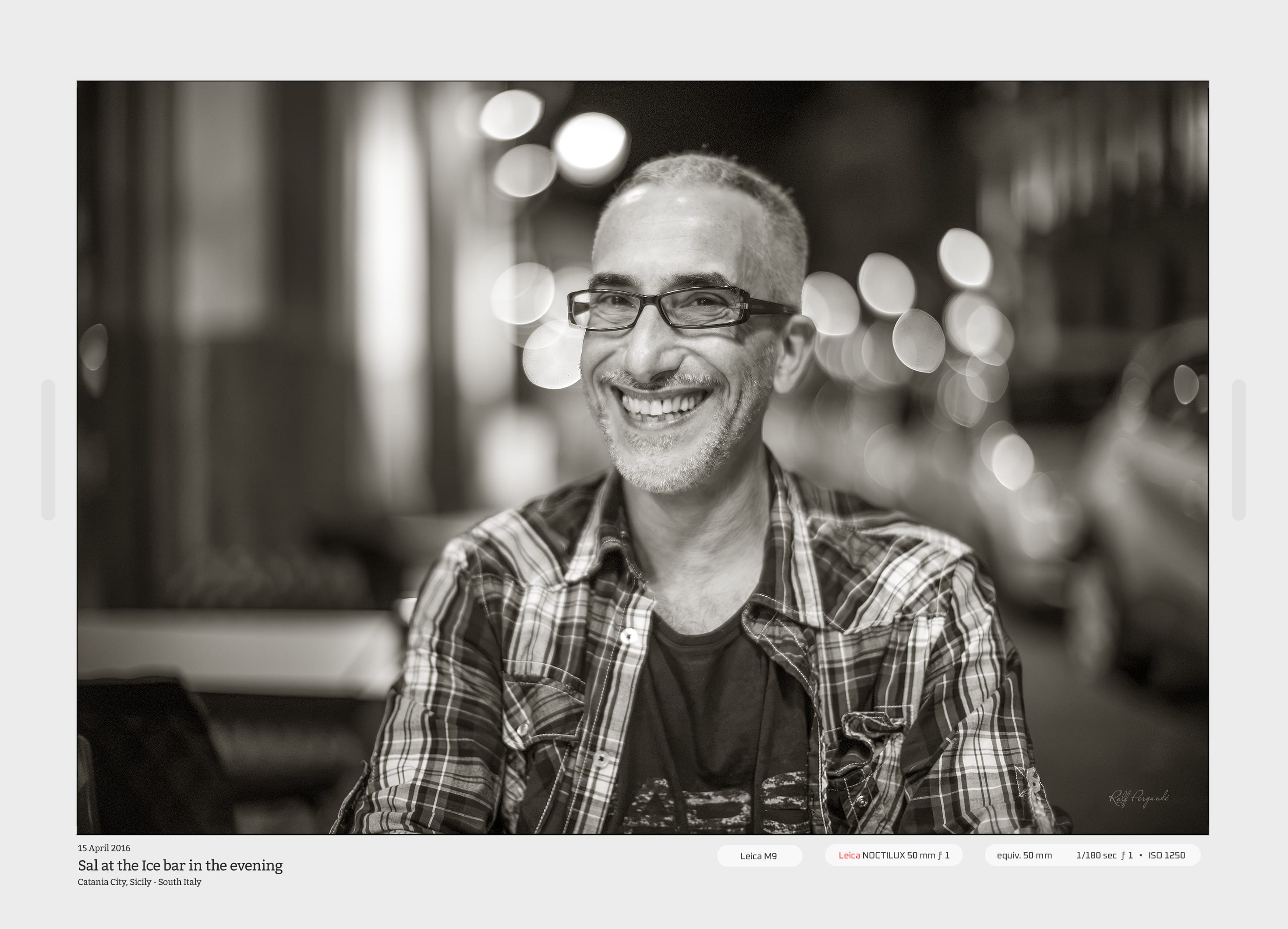
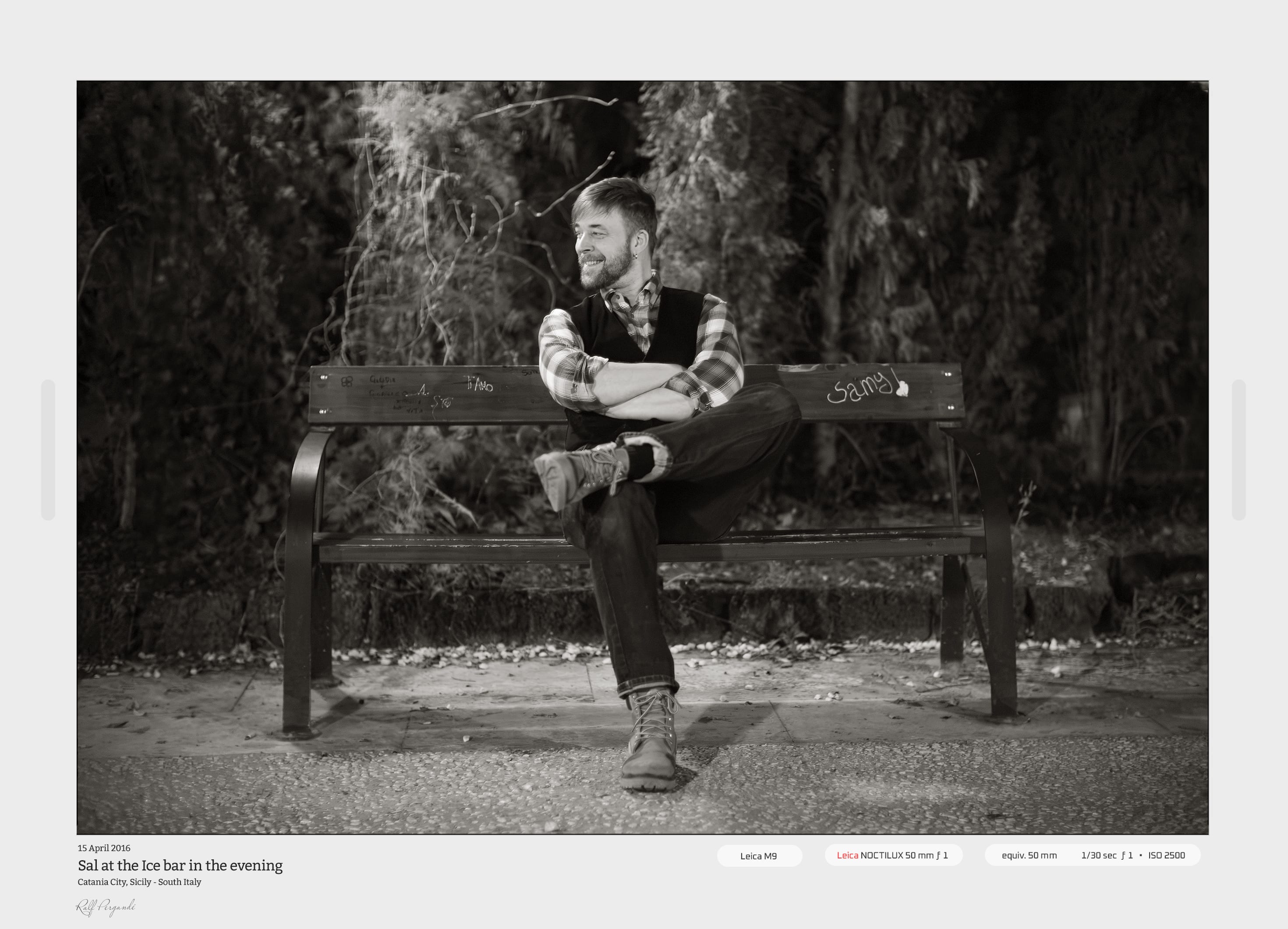
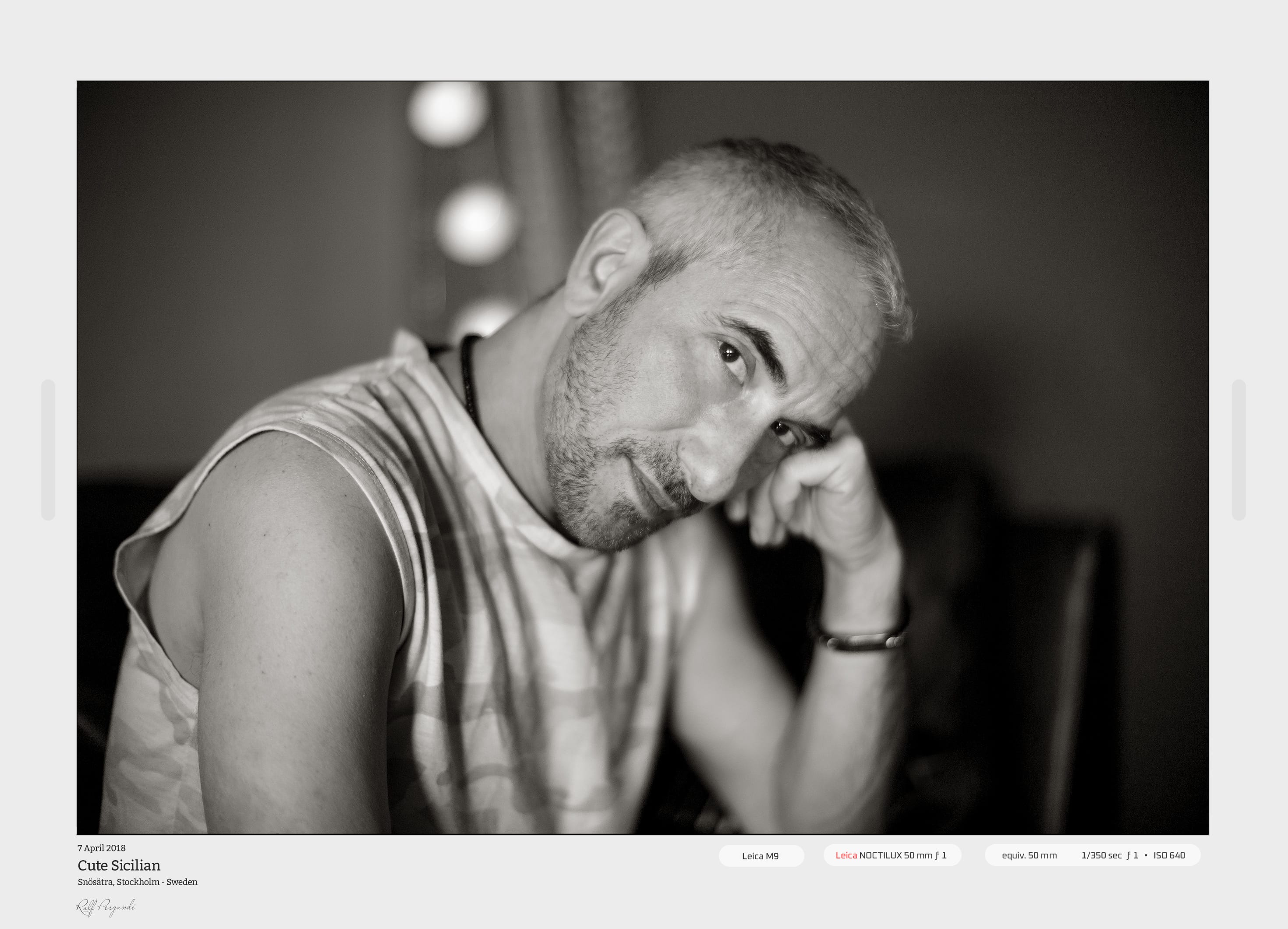
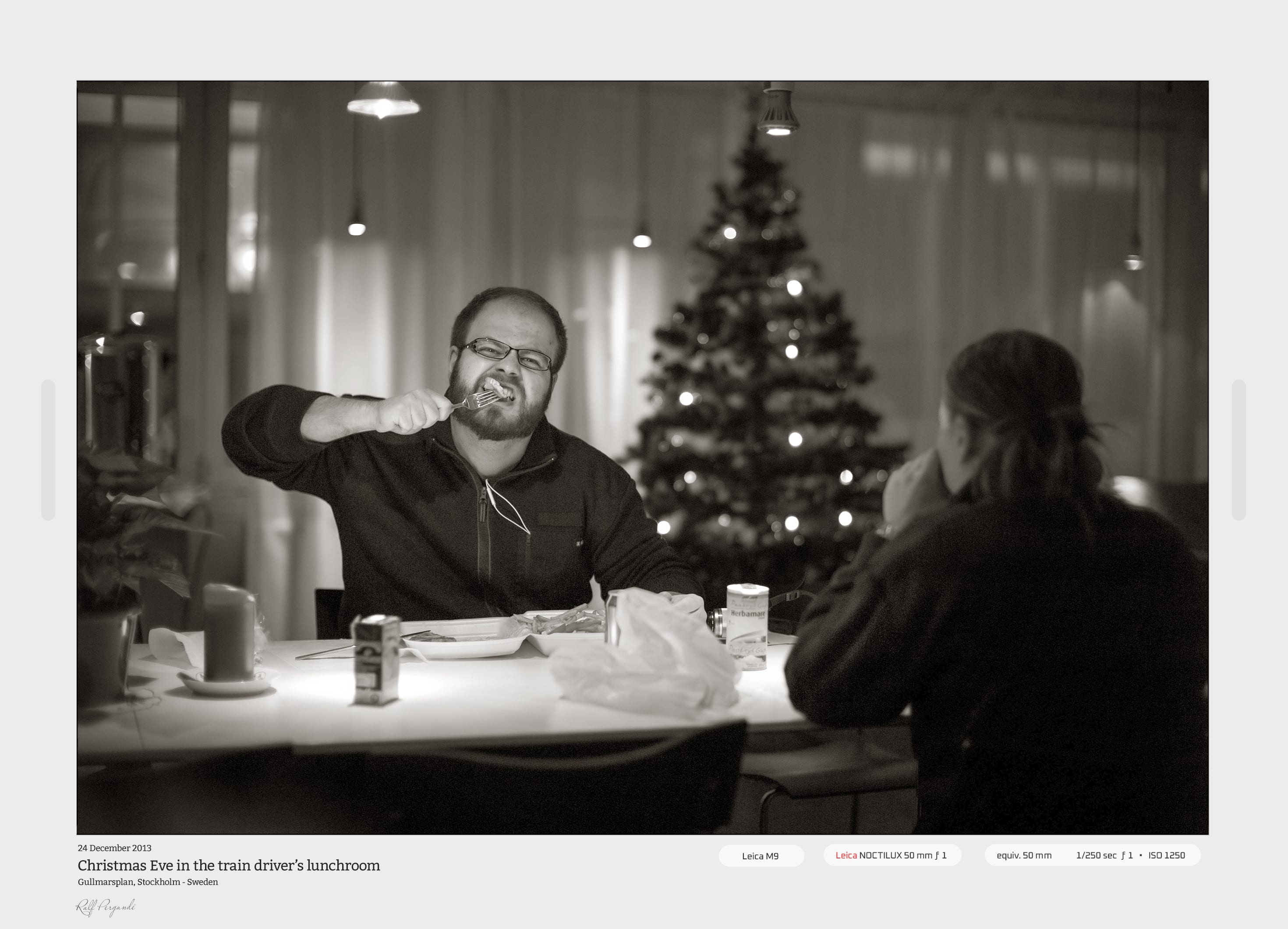
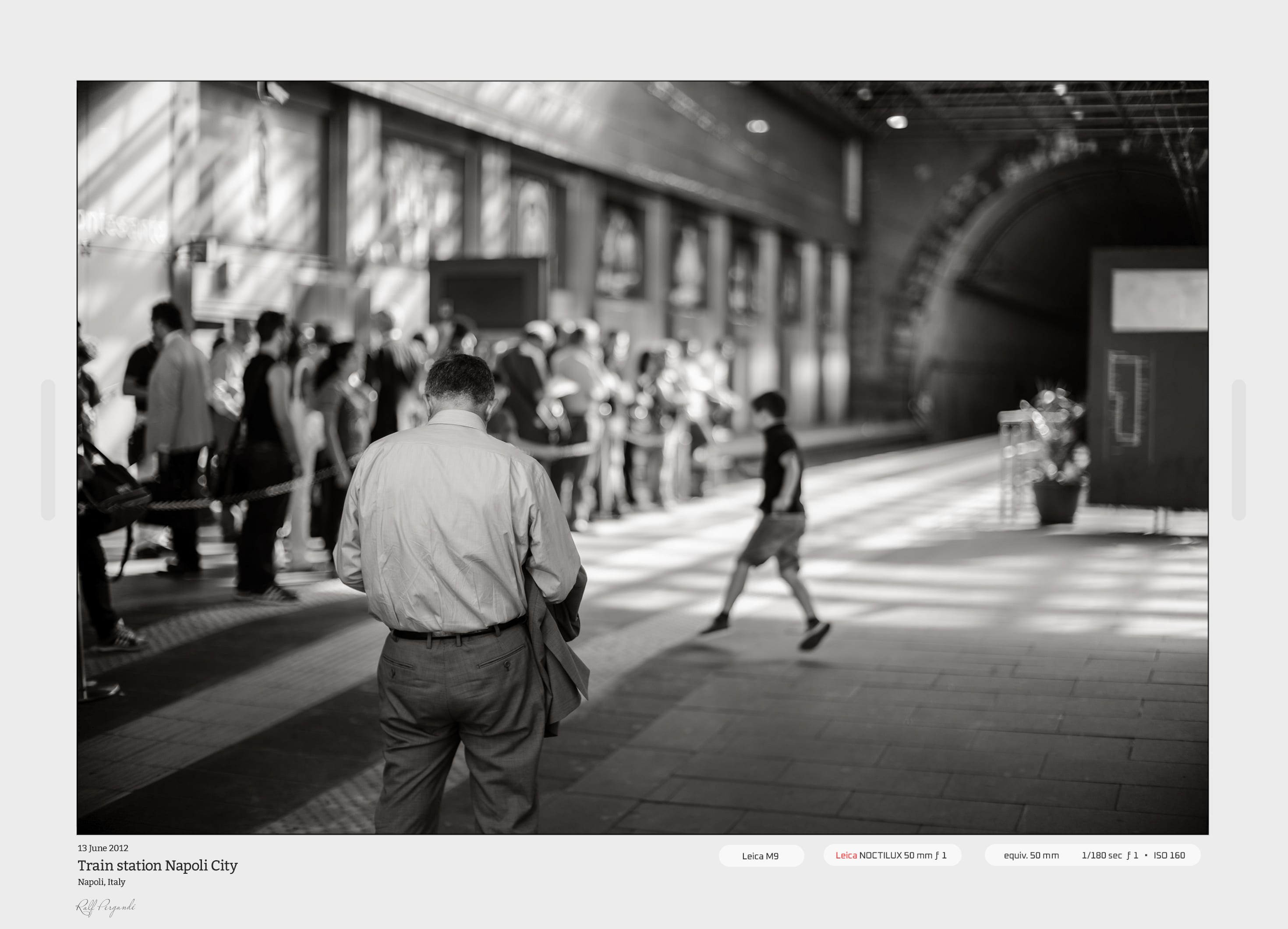
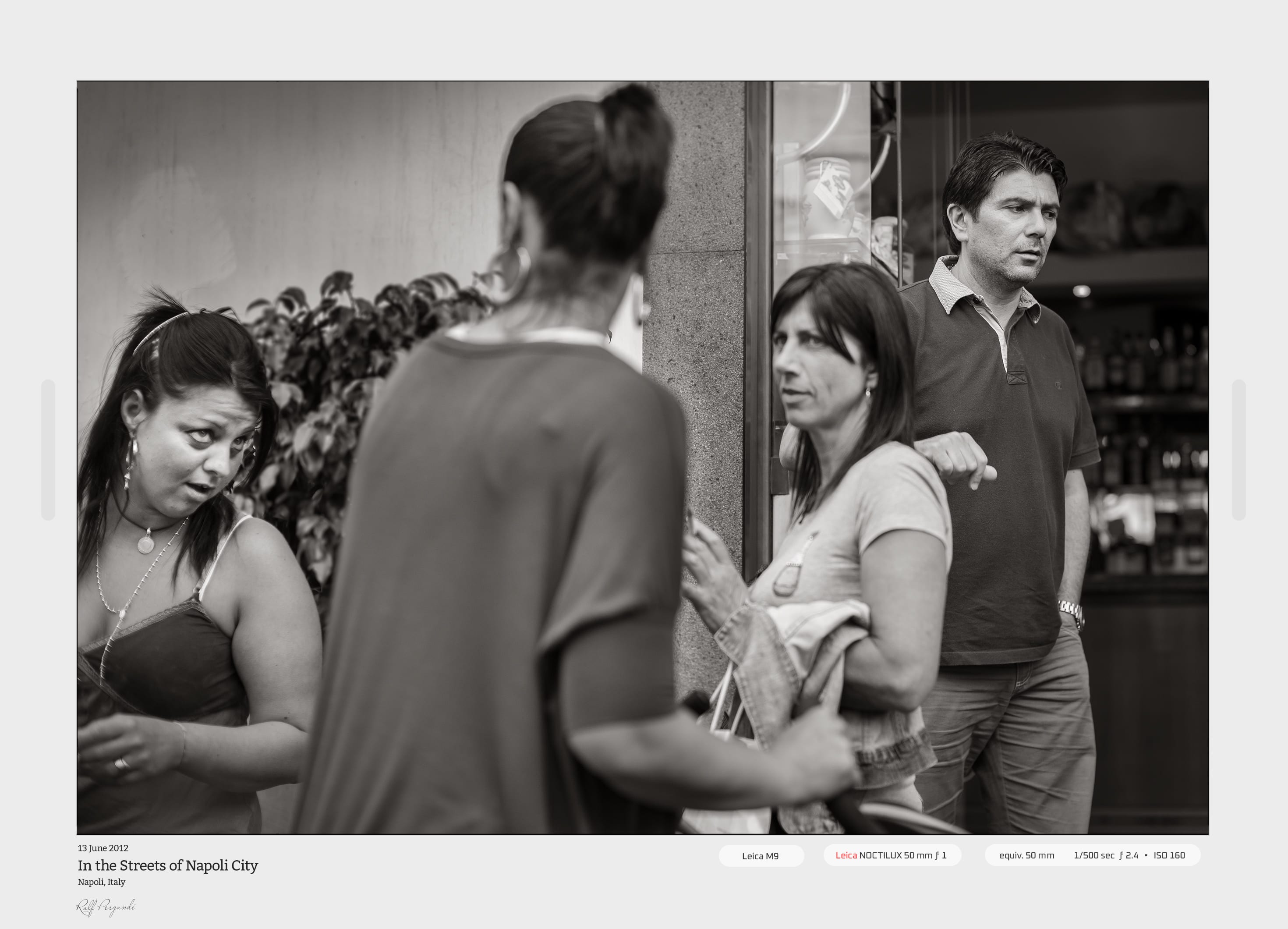
Recently i spoke about Lenses which have that special rendering style in images, which especially in black & white resemble that of the classic (Mandler) Leica Noctilux-M 50/1 lens. Above you see Mariella and Dario taken with that lens mounted on my Canon EOS R6 camera - giving off a special "draw" of people in low light.
Like a mix of modern clear imagery with old fashion soft-glow type of photography. The lovely gradual transition from gentle sharpness to soft blurry backgrounds, which is already visible in the person's shoulders.
I just love it !!!
The other two "Noctilux" lenses
Now, the Laowa ARGUS series too - has two lenses with the same unique rendering style; the Laowa Argus 28/1.2 and the Laowa Argus 35/0.95 - both ultra bright lenses like the Leica Noctilux. All three are in a way "imperfect" - which is actually part of the rendering style. That is what makes them so "perfect".
I am not sure if i can or want put the Samyang XP 85/1.2 in the same category - because although it is ultra bright, it definitely has a different rendering style. Different from the "Noctilux" type of lenses. The Samyang has more the typical Canon 85/1.2 L type of rendering style...
So, I leave that lens out for now.
In sunlight at ƒ1
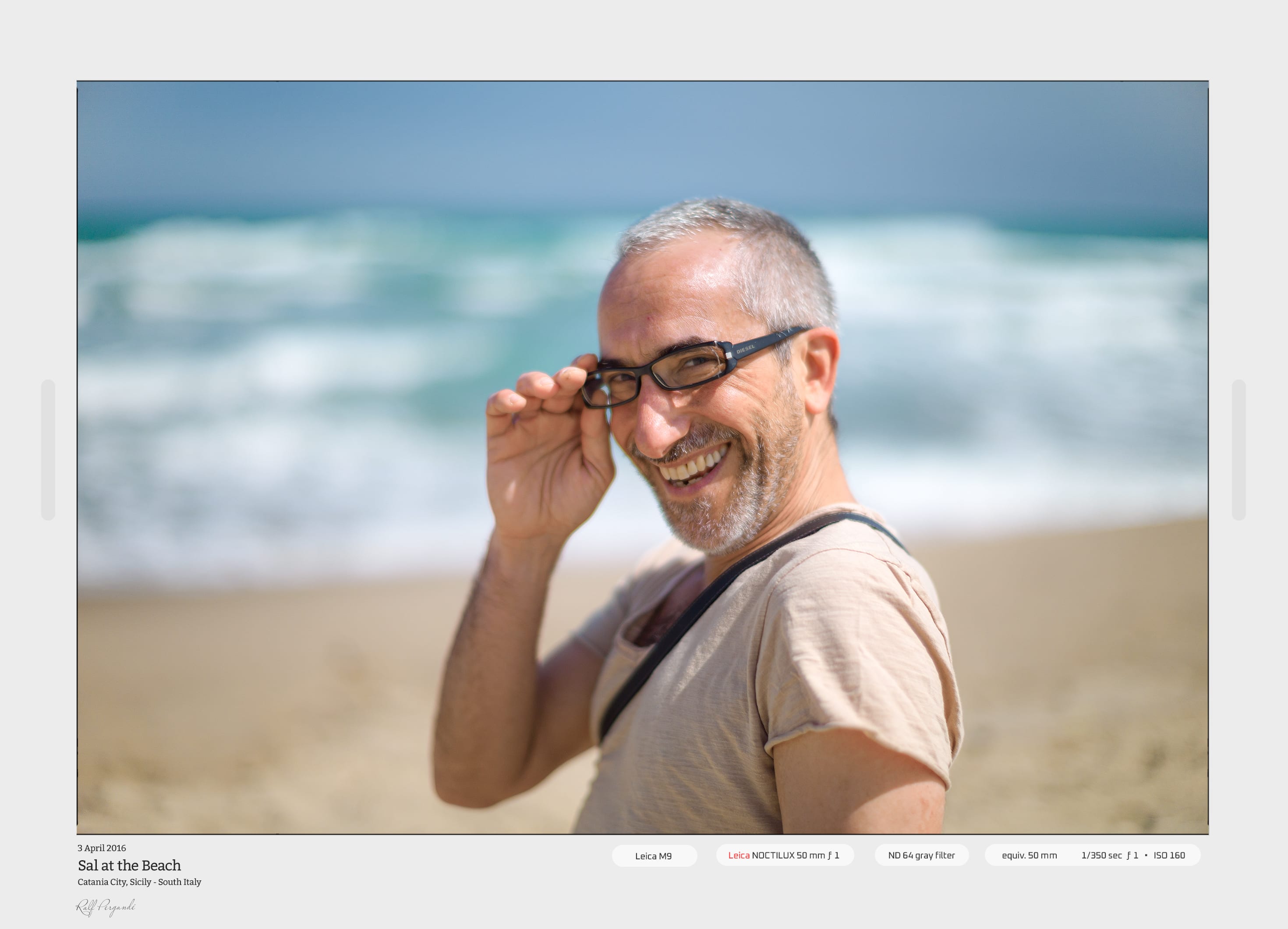
In very rare instances i have used the Leica Noctilux (on a Leica M9) in sunshine in order to make ƒ1 portraits - but a 6 STOP filter was required in order to reduce the light just enough so that it goes exceed the shutter speed (up to 1/4000s) of the Leica M9 camera.
I am not entirely sure with modern cameras like Canon EOS R6 where the fastest shutter speed ends. I think it is higher when electronic shutter is used compared to the mechanical shutter.
So, in order to make wide open aperture photos - i will likely to have to use a gray filter in order to reduce the massive light inflow when using an aperture like 0.95, 1.0 or 1.2
Variable Gray filter 86 mm Ø
The Samyang 85mm ƒ1.2 lens for example has a massive 86mm Ø filter size. Therefore i ordered instead of a fixed gray filter, a variable gray filter in that 86mm Ø size, plus some step-down rings, so that the filter can be used by other larger lenses.
It should bring down the extreme bright aperture, in order to fit in sunlight while still taking images at the extreme aperture of ƒ1.2 |