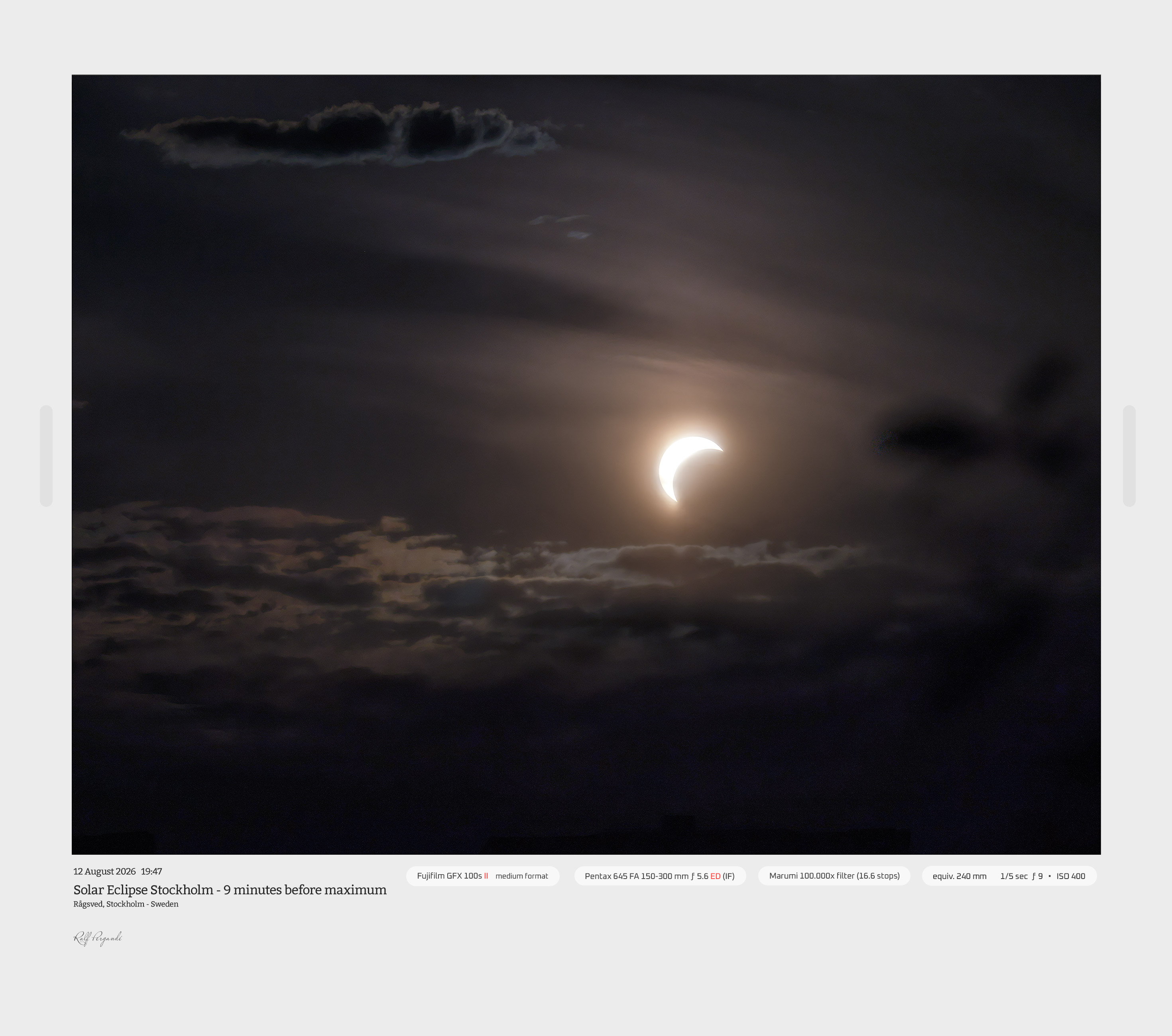
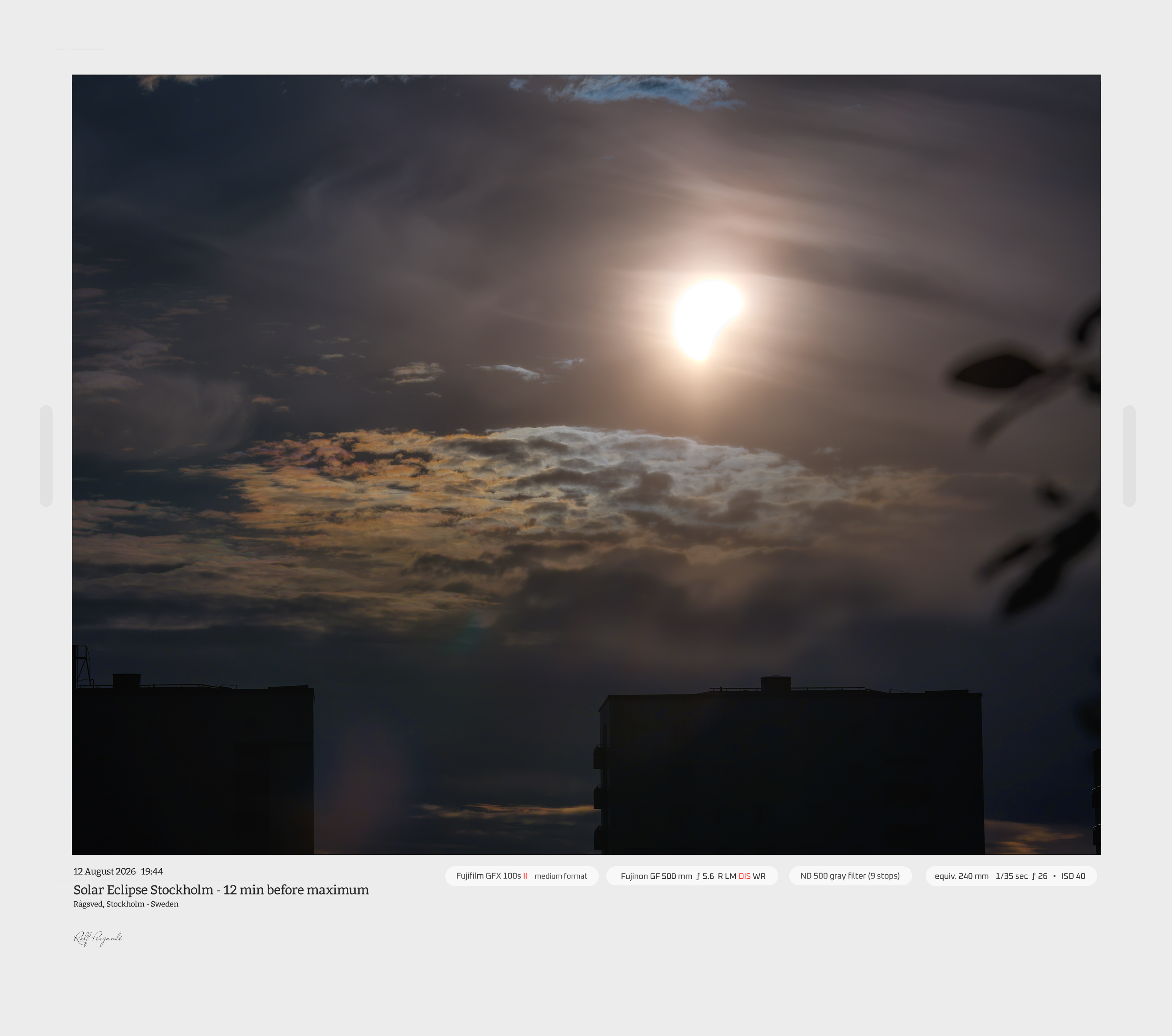
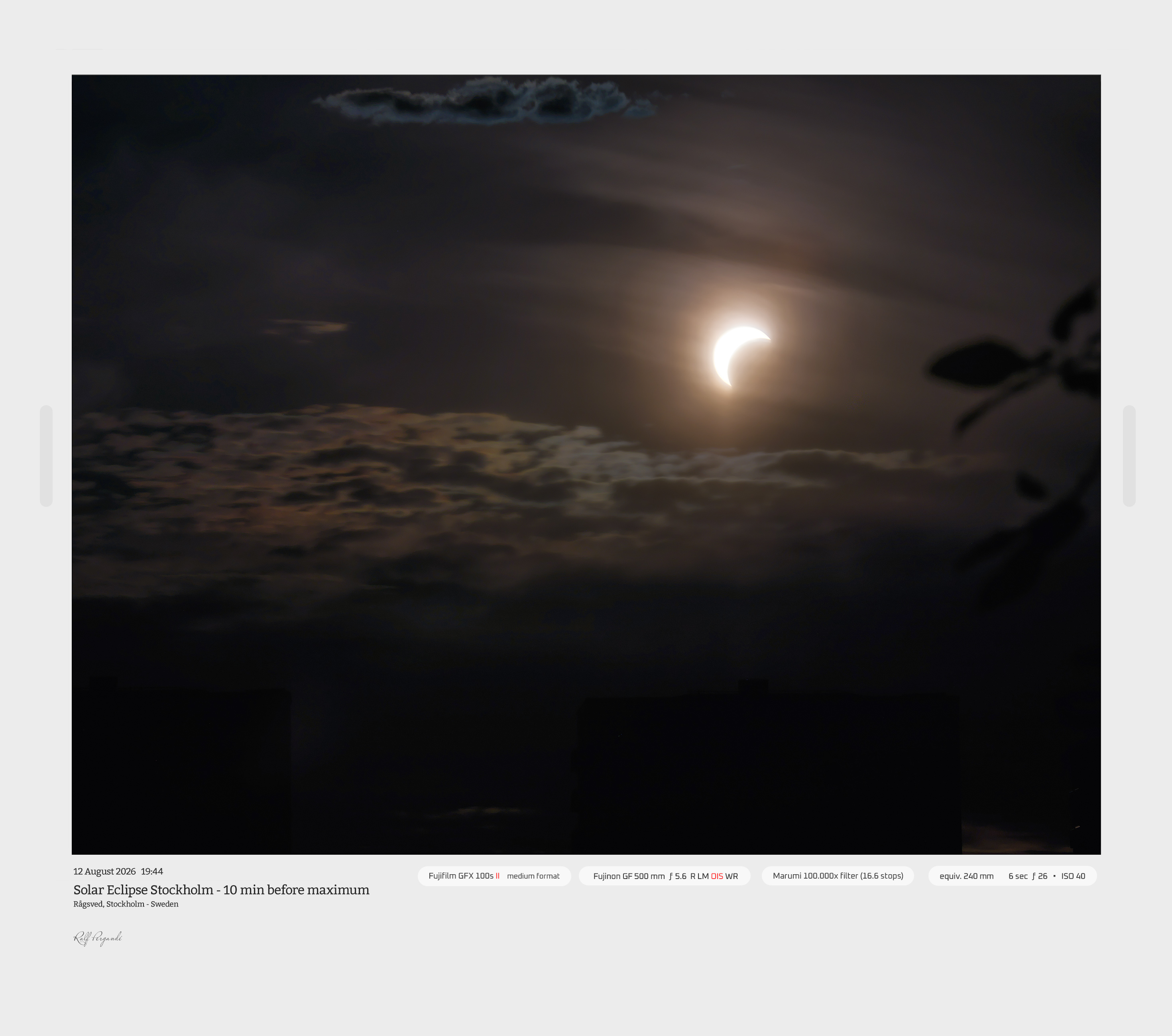
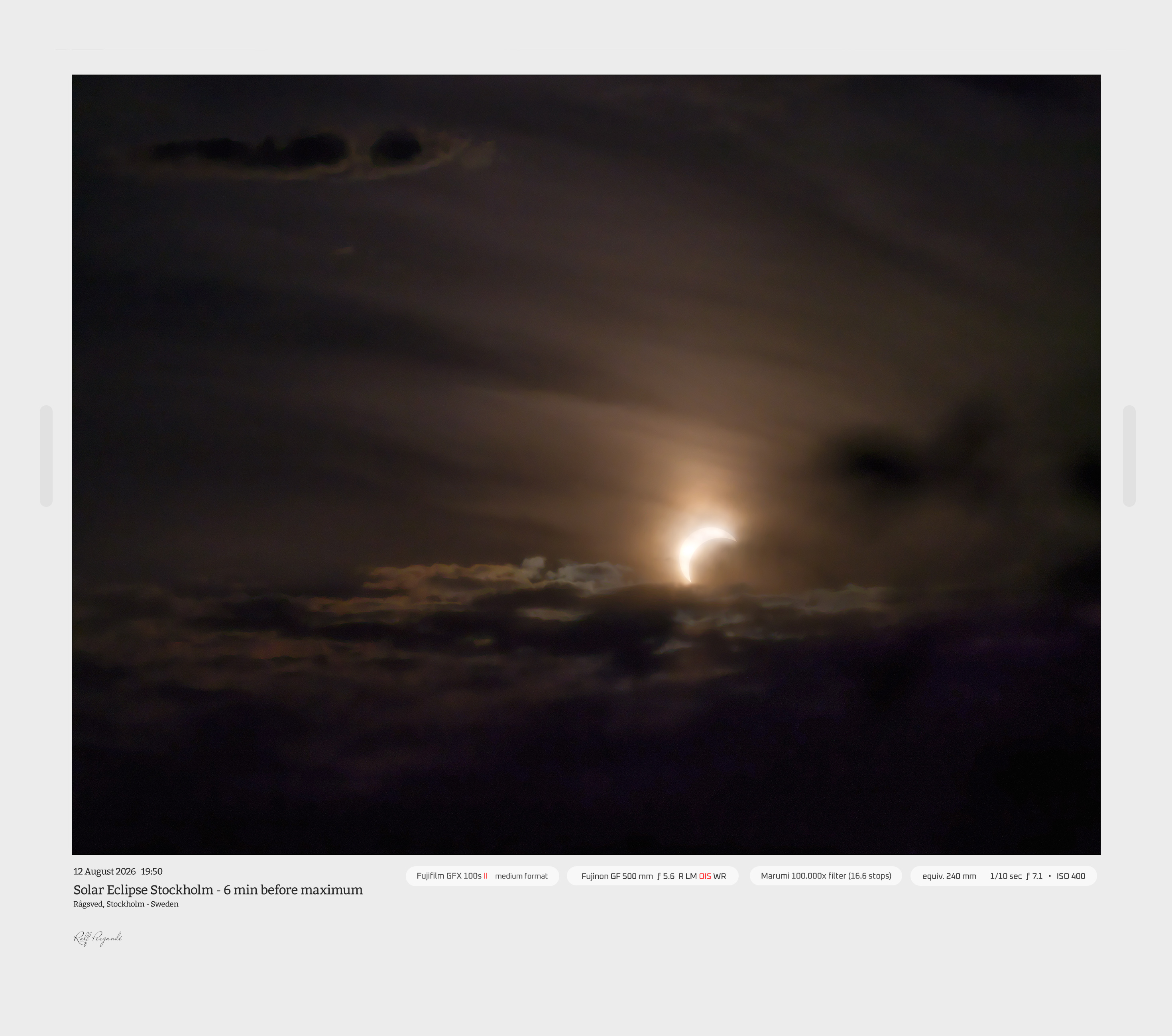
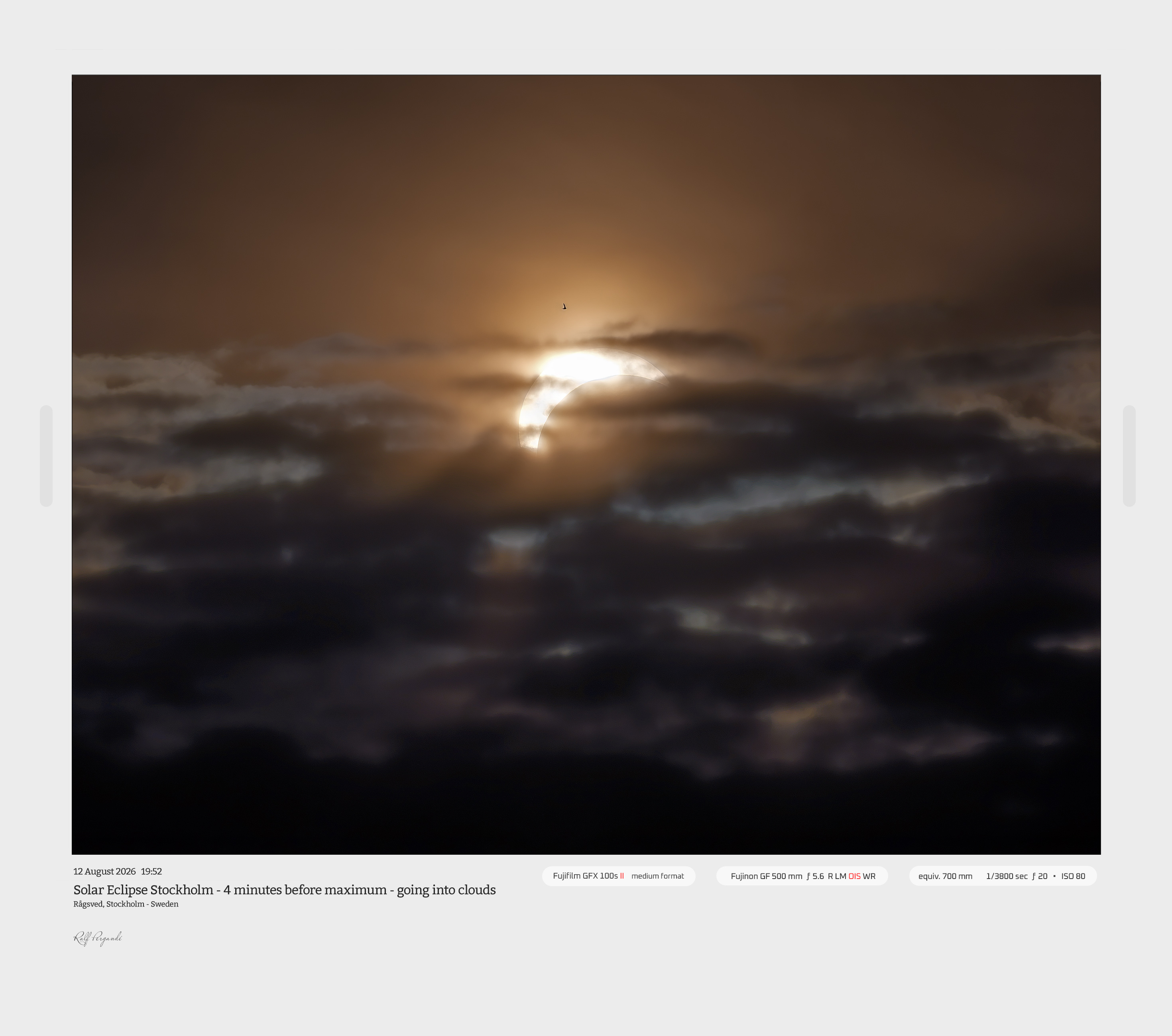
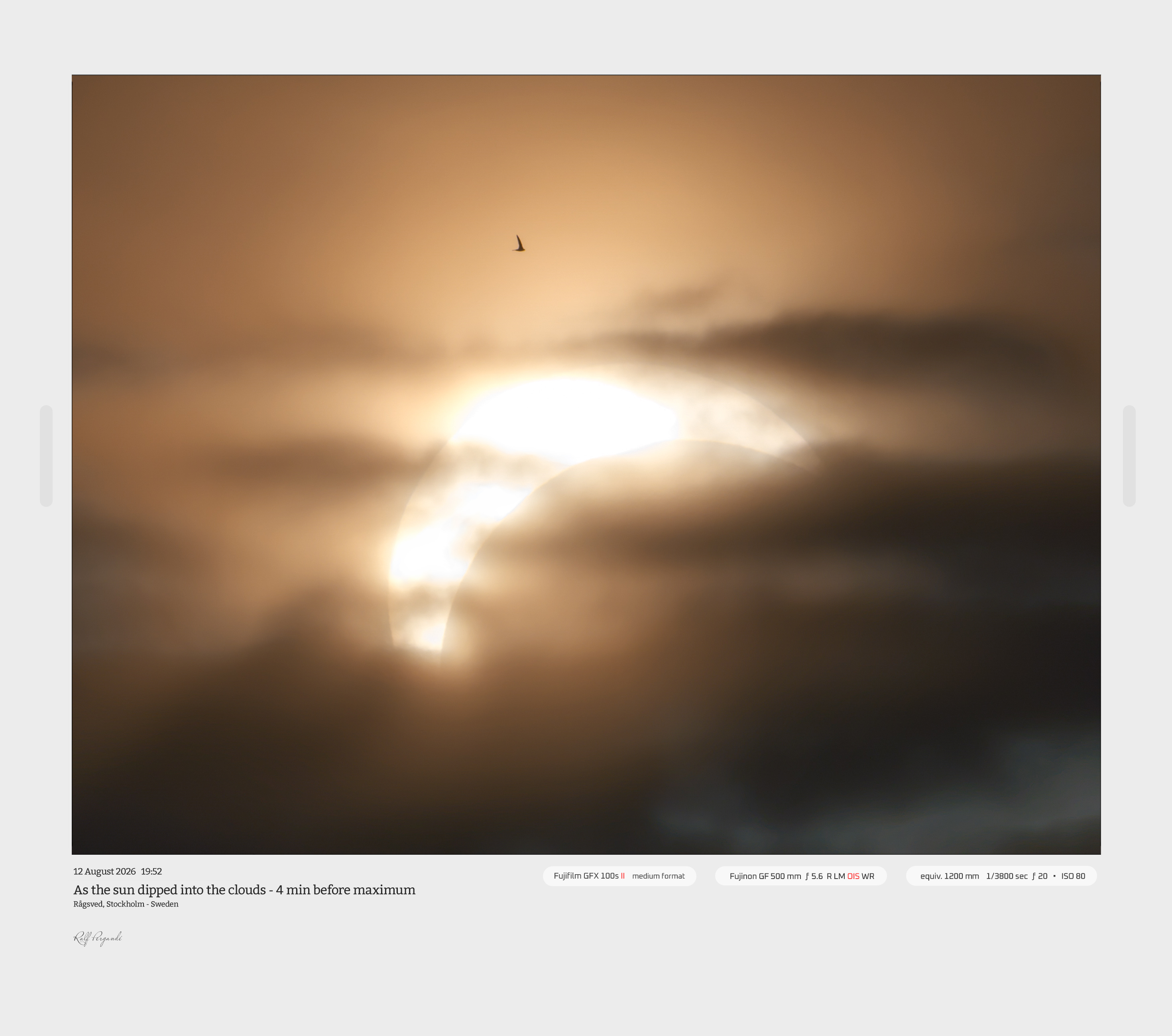
Well, photographic it was a bit of a let down - which was partially my own fault, of not really being prepared. By using the big Fujifilm GFX 100s II + Pentax 645 150-300/5.6 ED (IF) Zoom - i went the most bulky way (it felt like).
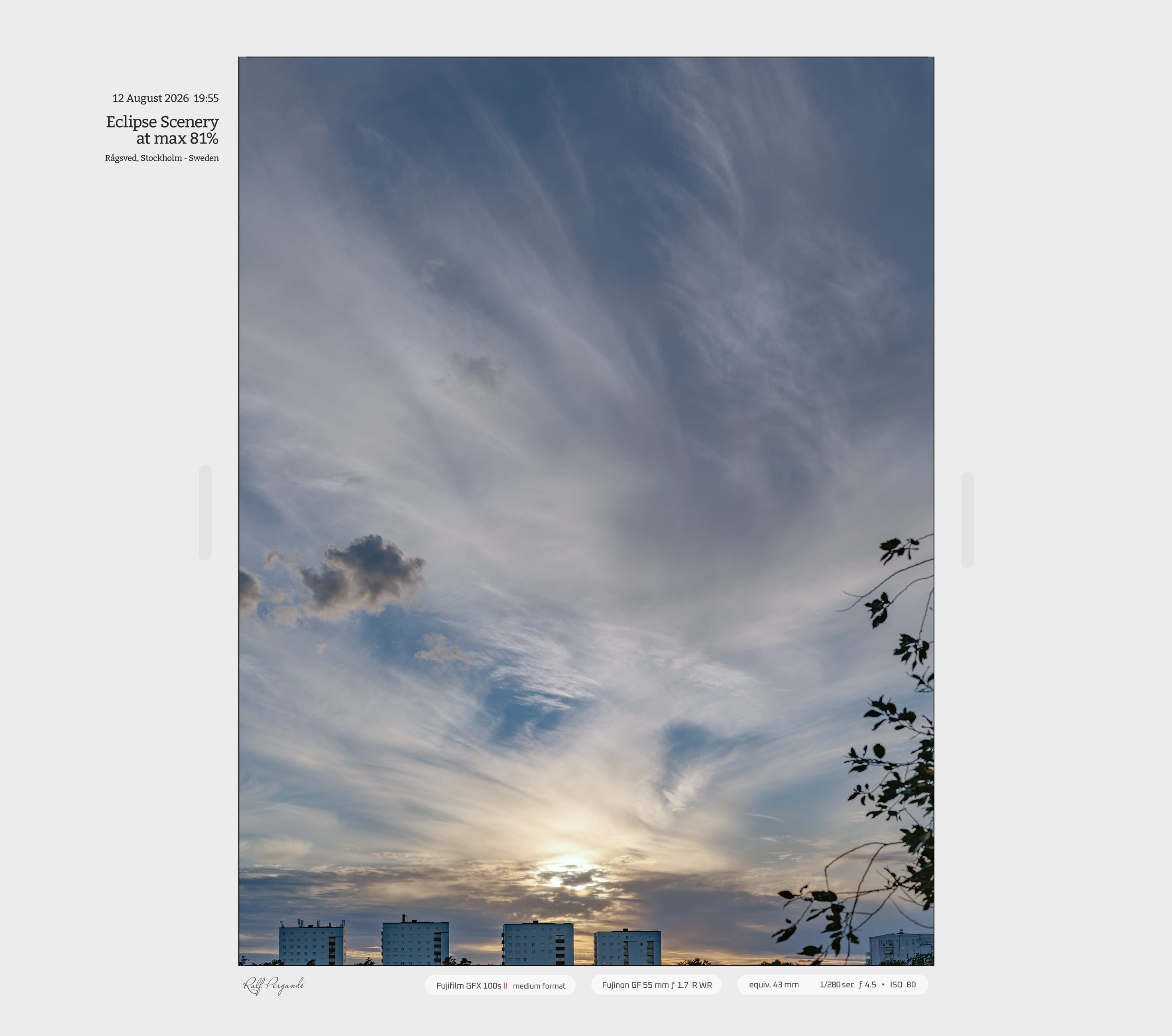
And then there were the clouds... into which the sun dipped right before maximum - and i stopped around 4 minutes before it hit the maximum (19:56) of the solar eclipse over Stockholm, reaching 81%
BUT... it was the PEOPLE and the LIGHT
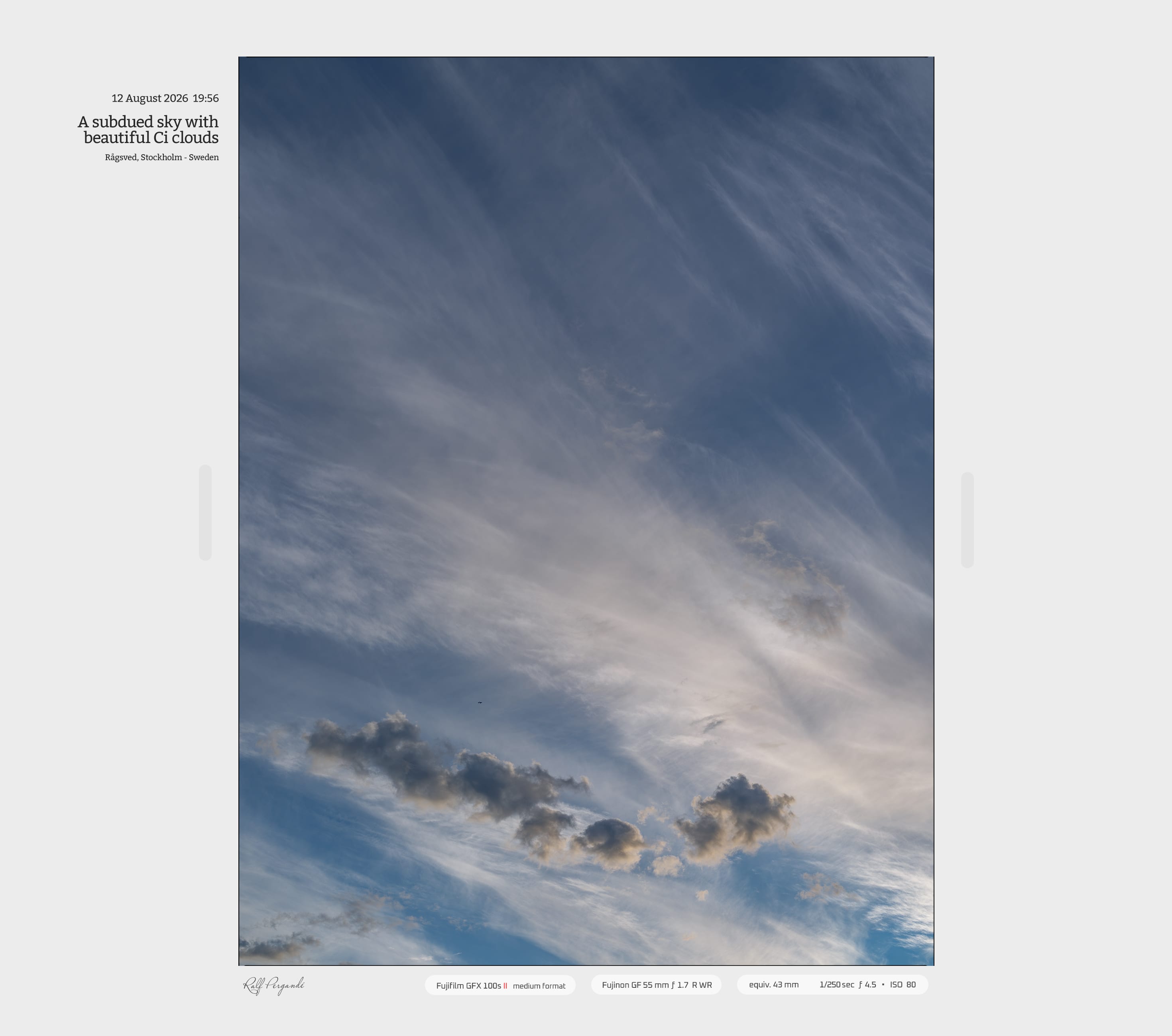
which was the most awesome part of the whole solar eclipse. The sky and its clouds looked absolutely beautiful, with long white stretched cluster of Cirrus clouds - while at the same time, the overall light was subdued. Especially when you get aware of that even towards sunset, you normally get blinded by the sun, and it is normally very bright in the sky still.
But that wasn't. Instead there was a "dark glow", kind of subdued skylight which dampened the scenery in illumination. Making it non-blinding, so to speak, although the sun was still shining, and the clouds relatively transparent (but not enough to let the shape of the sun through).
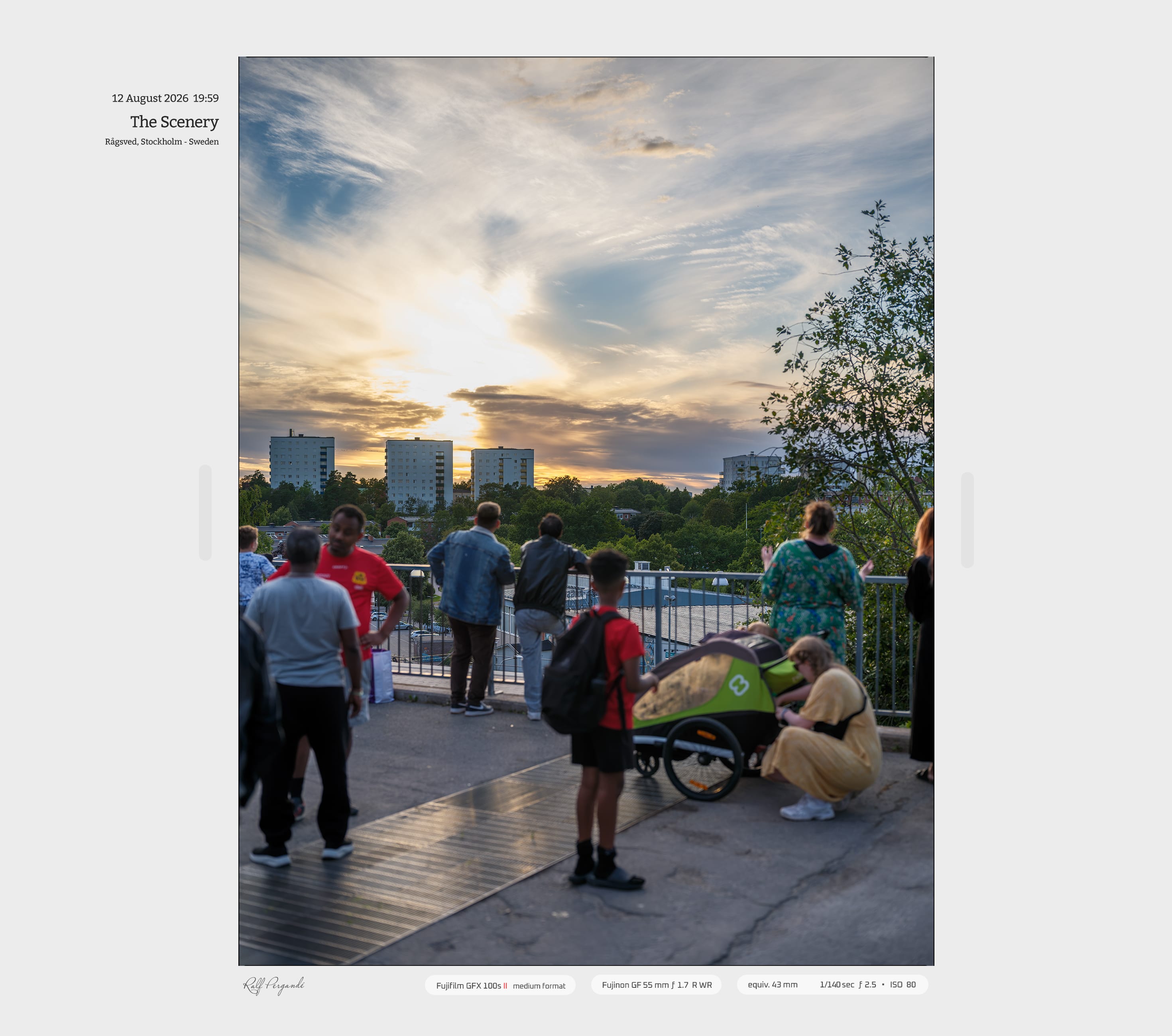
45-50 people standing around
There were at least 45-50 people gathered at the upper elevator near the Rågsved station - all came in order to see the eclipse. At the most unlike of places, you know, near the elevators which offer a scenery towards the West and north, towards the open subway station and Rågsved center and beyond. It is actually a nice little panorama place - elevated above the surrounding landscape. Both Sal and I often stand there a little while when we come home from work - because it offers such a great view of the sky and the ever changing cloud formations.
The people there, even started talking with one another.
Which i thought was super cool.
Kids came by
and wondering what I was up to - and i told him there is the solar eclipse. Then they remembered it. I told them not to look into the sun, and showed them the sun instead through my photo filter, so they could see how the moon encroached the solar disk. Which they thought was very cool to see very clearly (it was clearer in the beginning of the eclipse).
My photos where underwhelming.
I was fiddly and clumsy (but calm), had forgotten certain step-up rings (to align solar gray filter to the lens diameter i used), and made the mistake wanting to capture both the shape of the solar disk with the moon, at the same time showing the surroundings. Which of course, due to the extreme contrast, didn't work.
In the end, i should just have focused onto the solar disk itself and nothing else (every time there is a PARTIAL solar eclipse): using the Olympus OM-1 together with the M.Zuiko 300/4 IS PRO lens (600mm) and a 1.4x converter = 840 mm, plus solar filter. That would have done the trick - and made the whole setting very neat - given how small camera and the lens actually is.
I am not disappointed at all.
Just to go out, and feel the excitement of a partial solar eclipse, was kind of cool. I am glad that i got at least some photos, even if they are not great in any way. It is clearly better than nothing.
And again, the subdued light in the sky, was so cool to watch... It is also clearly visible in the satellite images, as the shadow of totality passes by - where you see that even outside of the total shadow, the surrounding countries did get less light. Including Scandinavia.
Left sky a notch darker
Since i left the scene perhaps 8 minutes after maximum, around 20:05, i noticed that the sky to the left of the sun, was a notch darker (Southwest horizon) compared to the sky to the right (north horizon)