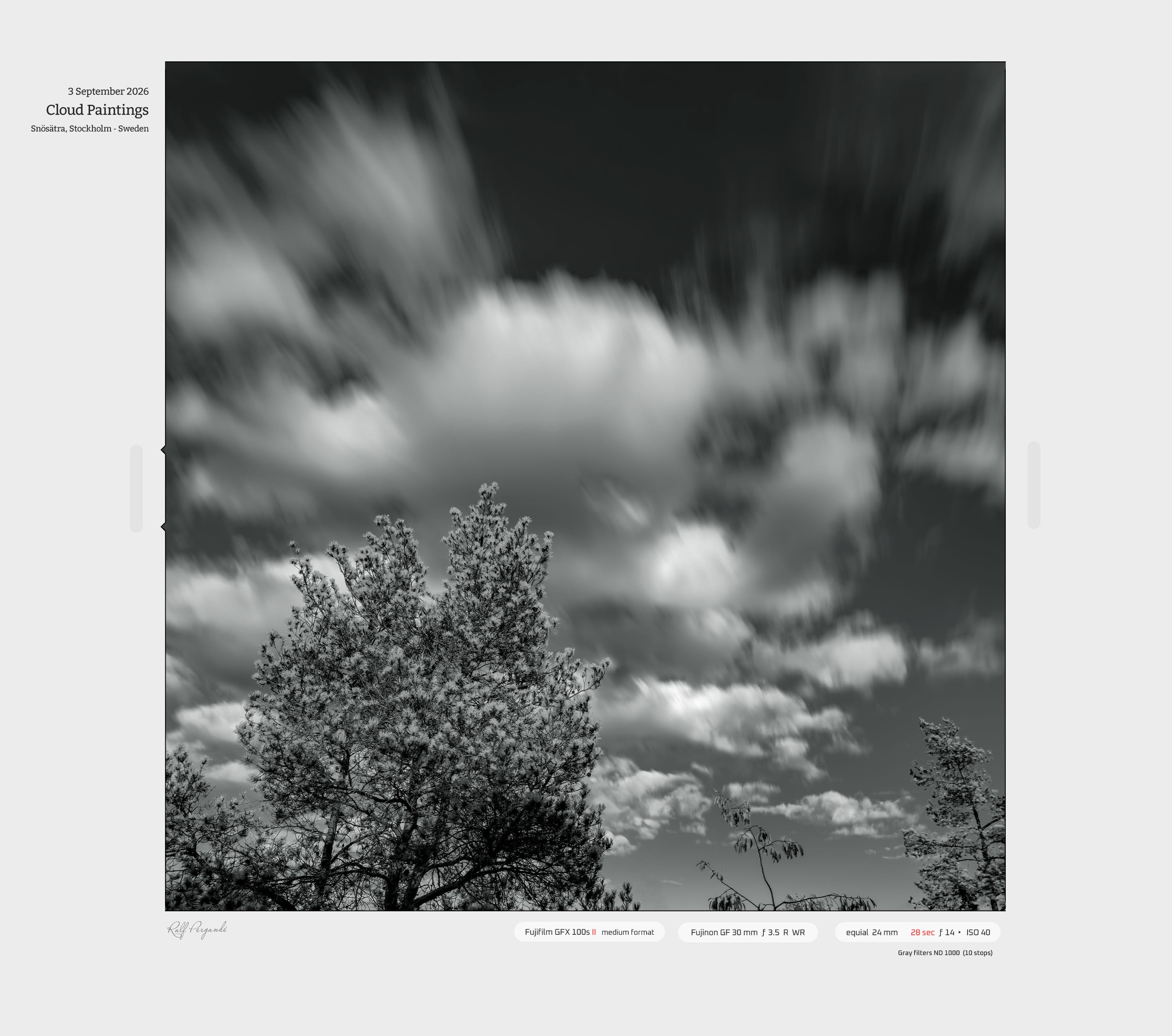
Ambivalence
I have started to do daylight photography with very strong Gray filters, often in the strength between 15-17 stops (ND 100.000 = 16.6 stops) However, my initial results often turned out irregular. Not always so interesting at the first sight... (it does take some processing to get there of course).
More annoying is perhaps the fact, that I have been unusual clumsy, everything from wrong focus to tilted horizons... Like a newbie, you know.  The kind of moments where you just have to roll your eyes to heaven; What the duck Ralf... seriously ?!
Working with such image files
Nevertheless, the RAW images i got came out nicely; being within the range for further processing in Photoshop. (Here the Fuji GFX sensors are truly flexible, I must say). However, when you use a strong gray filter in daylight, with 4-8 minutes exposure time - you get results that differ from normal images.
They can be poor in contrast, or just look very weird. Or having a strong color casts. Perhaps even dark corners - alt. stronger than usual vignetting. If you sensor is dirty, you get an ocean of dots across your photos. You will likely encounter quite a lot of underexposed images as well. And overexposed ones.
And. So. On.
Endless amount of gray filters...
and step up/down rings
Since i bought numerous of gray filters lately - in all kinds of sizes and strength, plus even more of those step-up and step down rings... To the degree that I am almost tired of it. Somewhere along the way, i have partially focused onto the wrong kinds - which means, the step up/down rings didn't really help that much in trying to combine various filter diameters in order to get adapted to a lens (diameter). I mean, older filter i have, plus newer lenses - all have different sizes... So, still missing step-up rings / step down rings.
So, I still bump into situations where i couldn't combine two filters because the correct step ring was missing. My previous gray filter purchases often were ND 1000 filters - which with 10 stops, often give too short exposure times. (I want to get up to 2-8 minutes exposure time in daylight). The ND 1000 filter result into far too short exposure times, plus you need to stop down extremely (which favors the ocean of particles becoming visible on the sensor). So no, Gray filter around ND 1000 is not enough strong.
*hurrk*
Now, I am going for ND 100.000 gray filters instead. (Summer skies with clouds).
Beginnings
As i said - I am in the very beginning of longtime exposures in brought daylight - and act like an amateur with not so nice results. So, I need to get my ass out of the house with this mission of longtime exposures during daylight (when clouds are present in the sky)
I think September and October still pose interesting skies over Stockholm with more bulbous clouds alt fast moving clouds. As long the Baltic sea still fuels the sky with its stored energy from summer, clouds will be interesting and puffy. Sometimes even into the month of November.
Then I start anew with this type of photography, in late spring. Additionally, I could test longtime exposures of the city and streets - which also doesn't require as strong Gray filter either. In order to see how this works with people and cars in the streets. They should become invisible when you exposure for 2-8 minutes. (I am sure a weaker ND 1000 filter with 10 stops light reduction is better - because a city or street / building scene, isn't as bright, like aiming the camera against a summer sky with clouds)
Normal "B" exposure vs Olympus "Live Comp" Exposure
What is different with these longtime exposure images compared to when using the Olympus Live Exposure setting ? Well, the latter only imprints any additional highlights - but clips off the darker parts of an image that is being "imprinted" into the scene. Surely you can make exposures for an hour without ever encountering overexposure that way. But the character of such images is quite different - compared to the ones i made today, with genuine Gray filters.
The Olympus "Live Comp" longtime exposure version
Here below - you can see that when the Olympus OM-1 camera, exposes for 43 minutes (with a 17 stop gray filter), but only exposes for the highlights it adds on top of the first frame. It is like a continued multiple- exposure - which only adds the highlights onto the original photo you take in the very beginning.
Therefore you get strange "clippings" in the transitions between shadow and highlights. The shadows never get overexposed, because the camera cuts those off, so to speak.
That however does not occur when you use gray filters and do normal "B" longtime exposures. Here it adds all light gradually along the exposure time. If you expose too long times, the image gets overexposed of course.
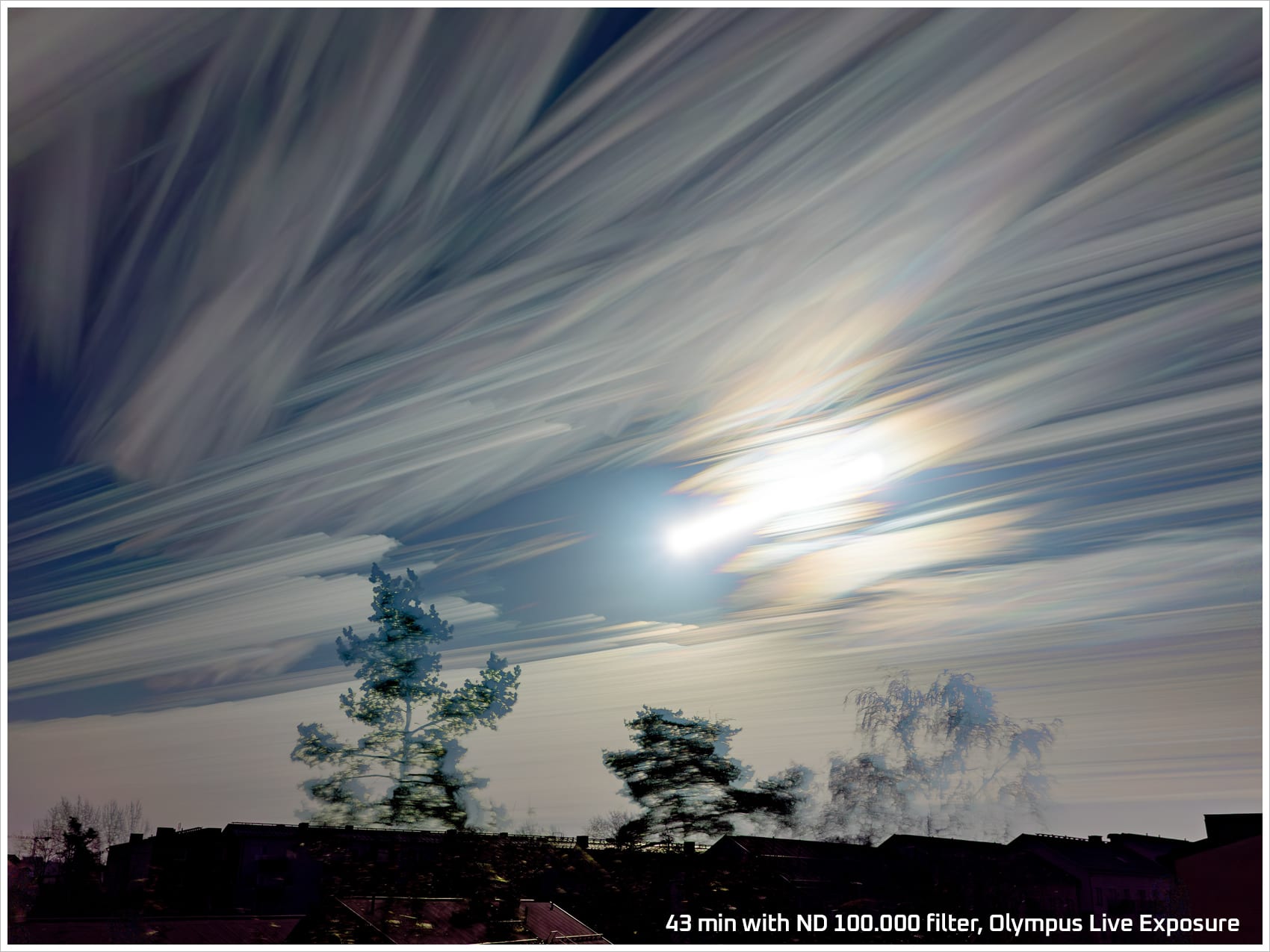
Easy "Live Comp" - but with weird effects
(longtime exposures used in daylight)
Of course, the Olympus variant is way easier to perform; giving you unlimited longtime exposure times as long your battery last basically - without ever overexposing the image. [unless the light becomes too strong, like going from night into dawn)
That's why Olympus "Live Comp" it is so handy for star trails at night, as well for light painting !! Each technique has a different character, and can be used consciously dependent on the effect you wish to accomplish. How ? Oh boy, you learn from the bobo's along the road... that's perhaps the best way after all. Or like I do, after not having used daylight longtime exposures with gray filter since 2011... i got rusty.
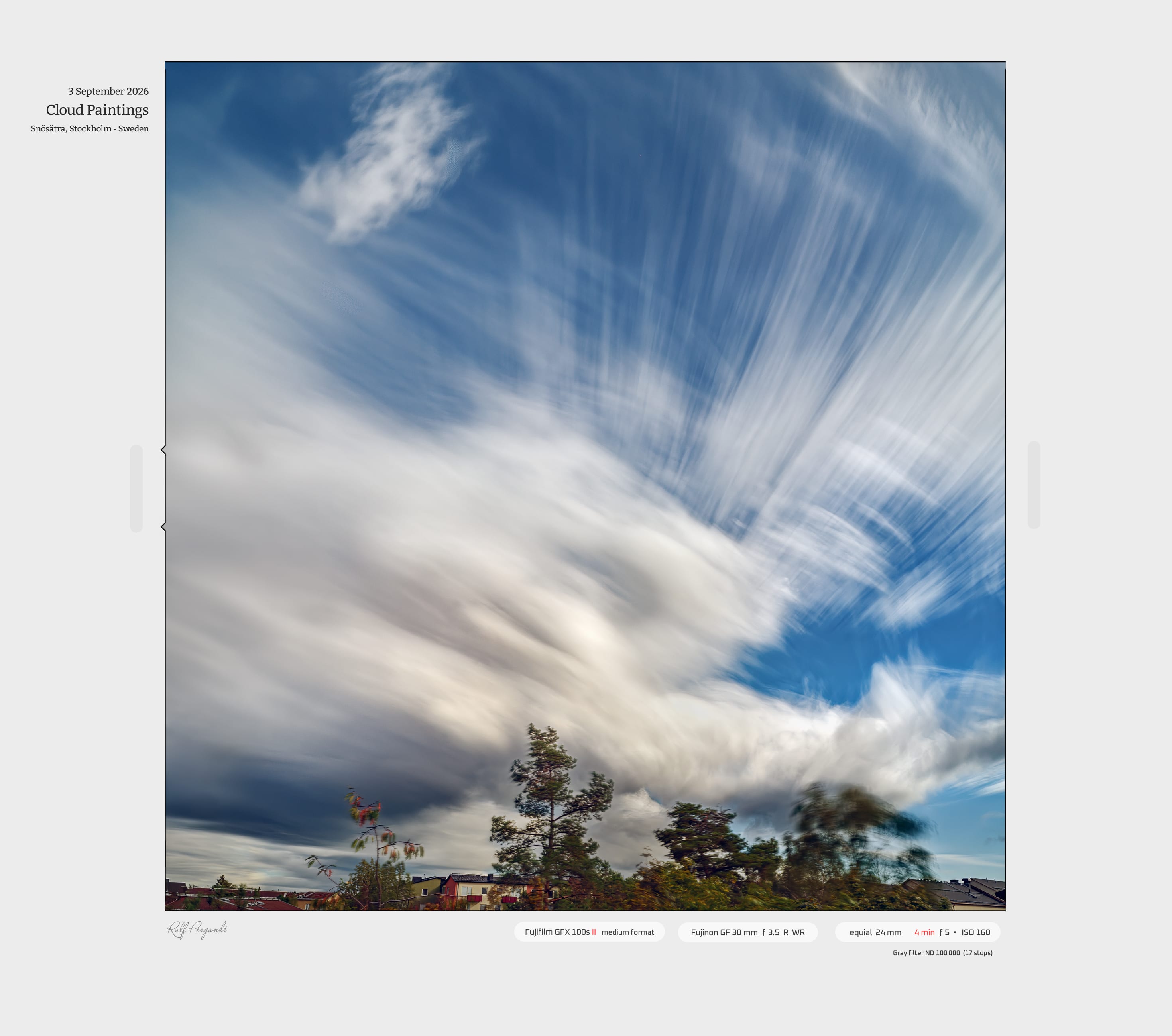
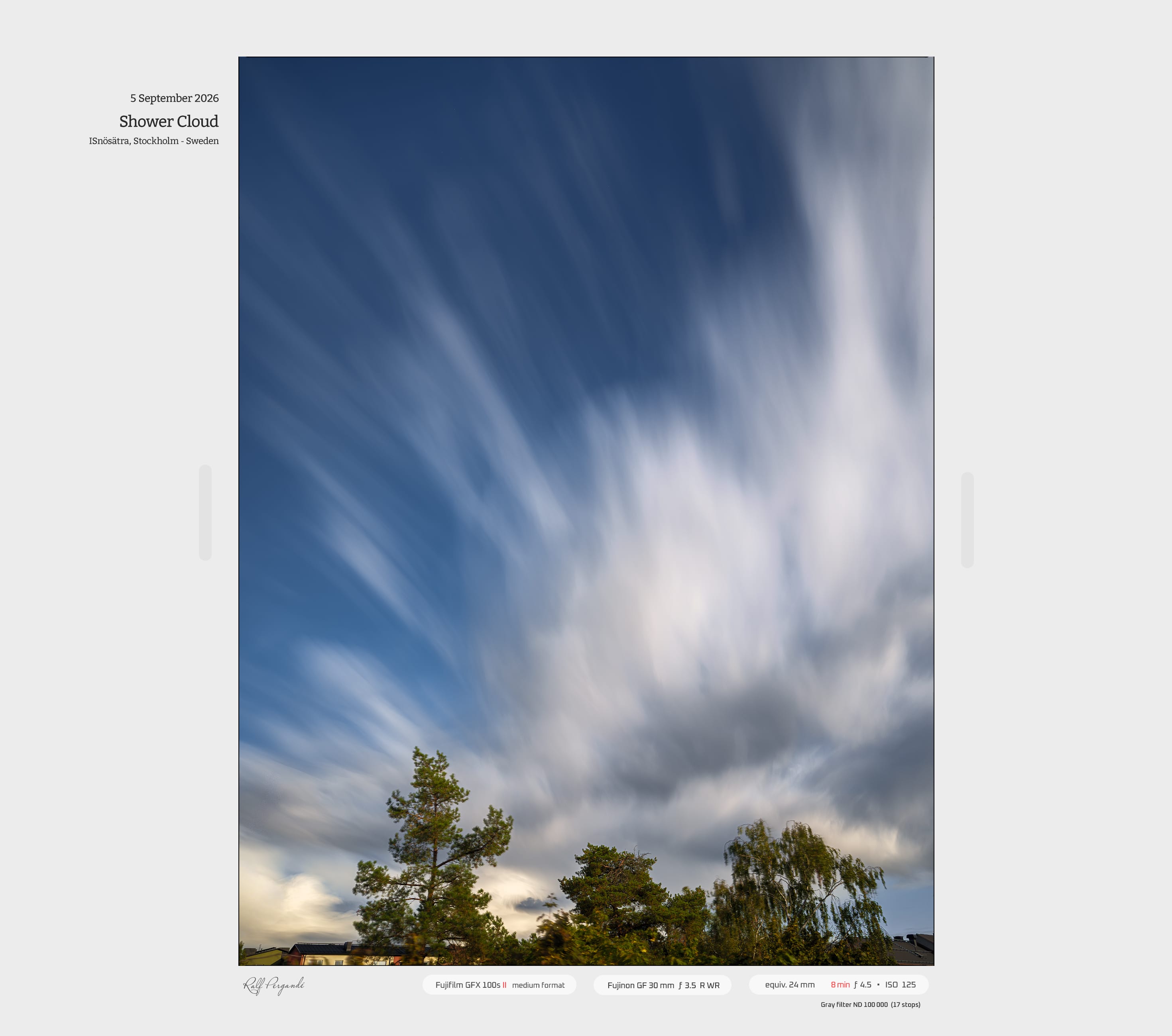
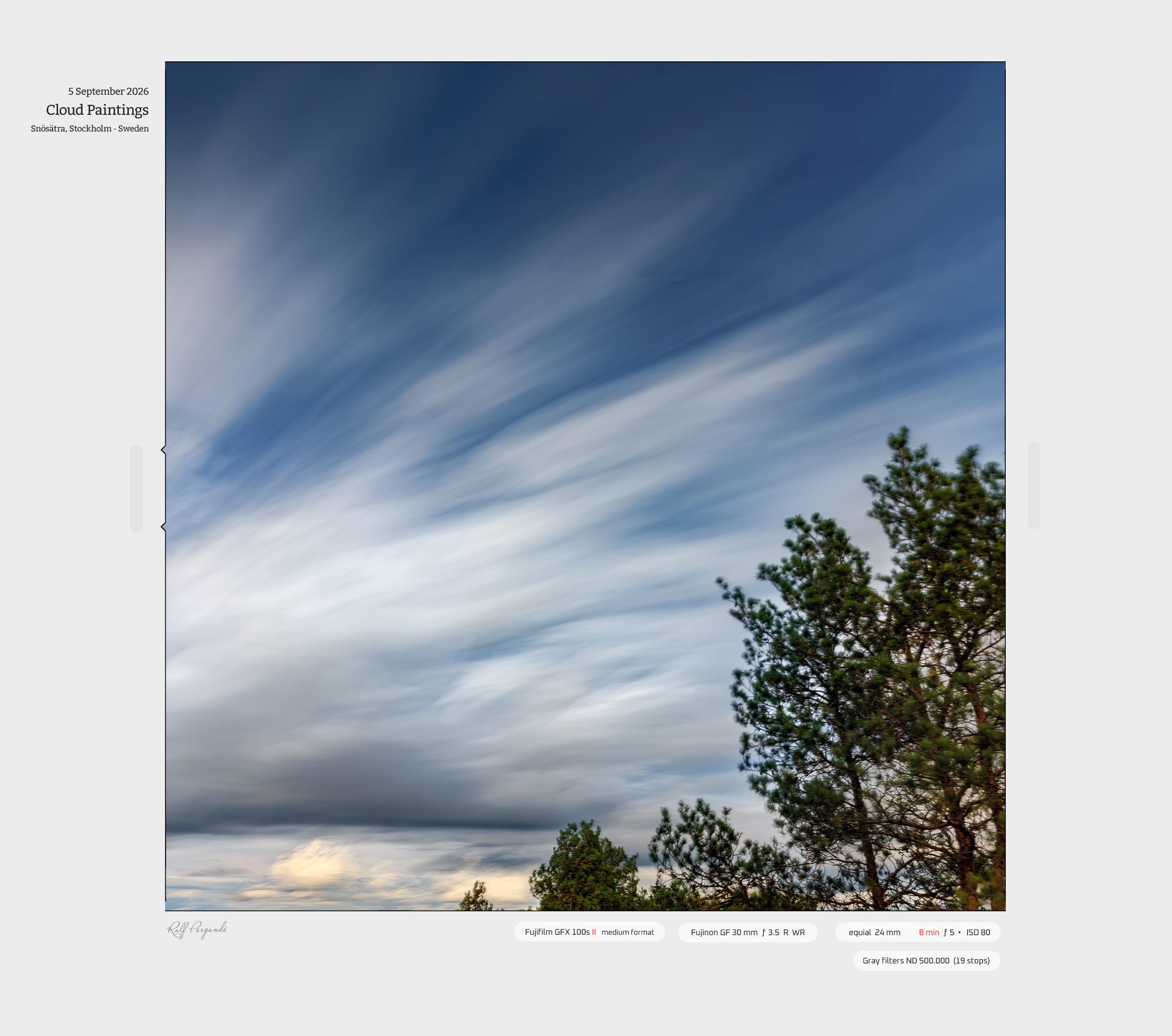
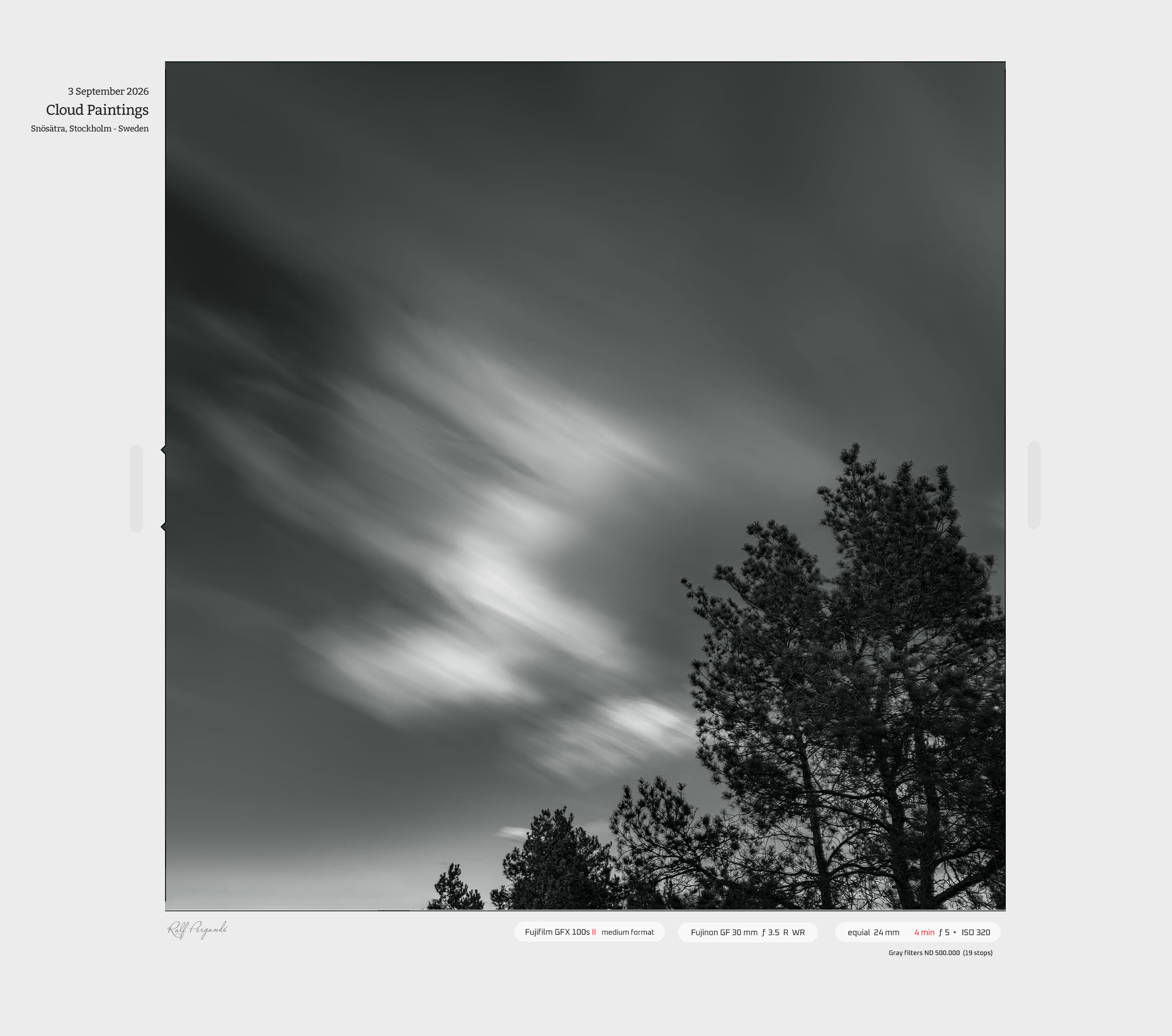
When it comes to cloud scenes in daylight - I do prefer the natural looking, traditional type of "B" longtime exposures - like in the photos below.
|